The story behind the design
Moonlit Garden
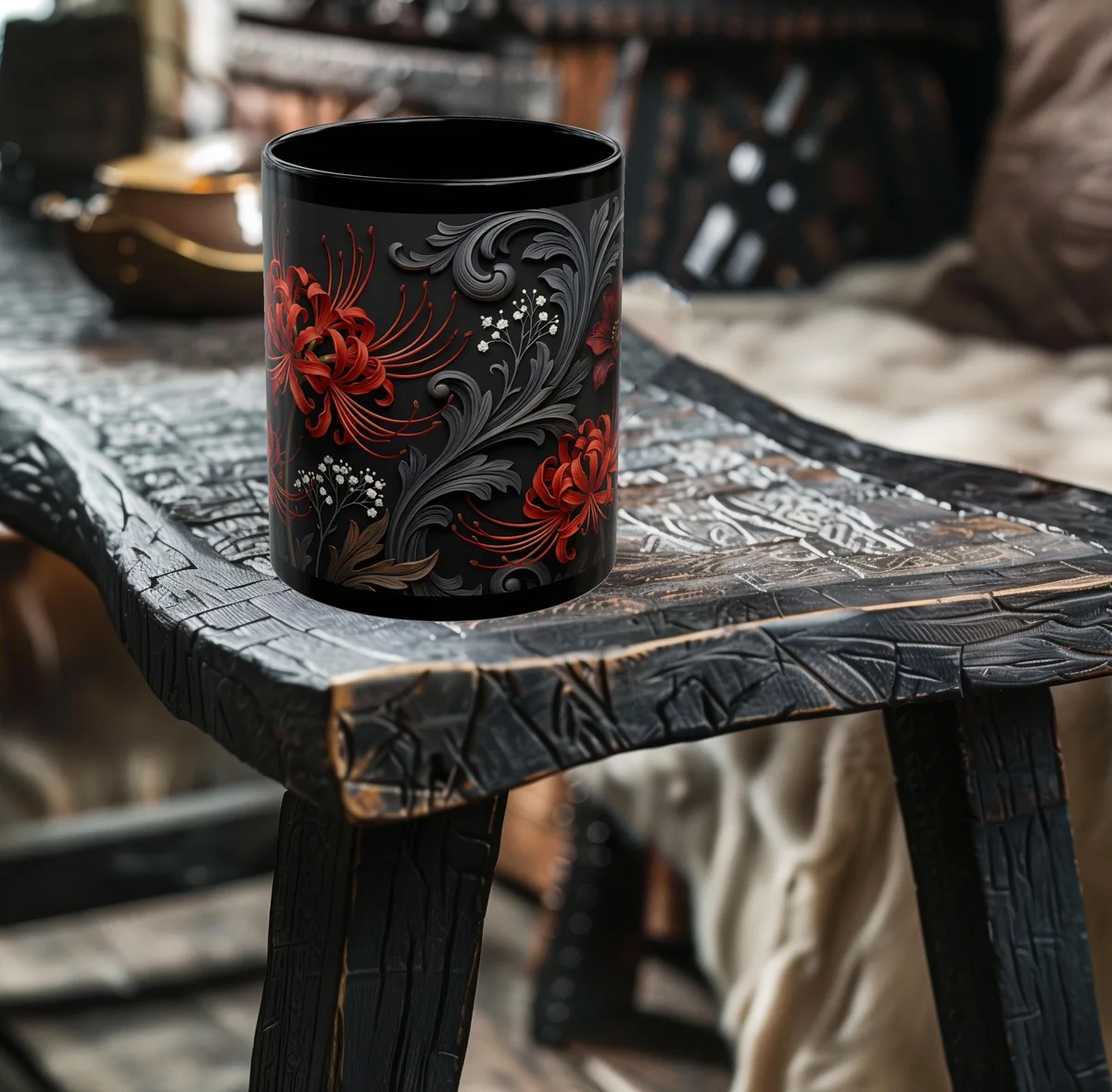
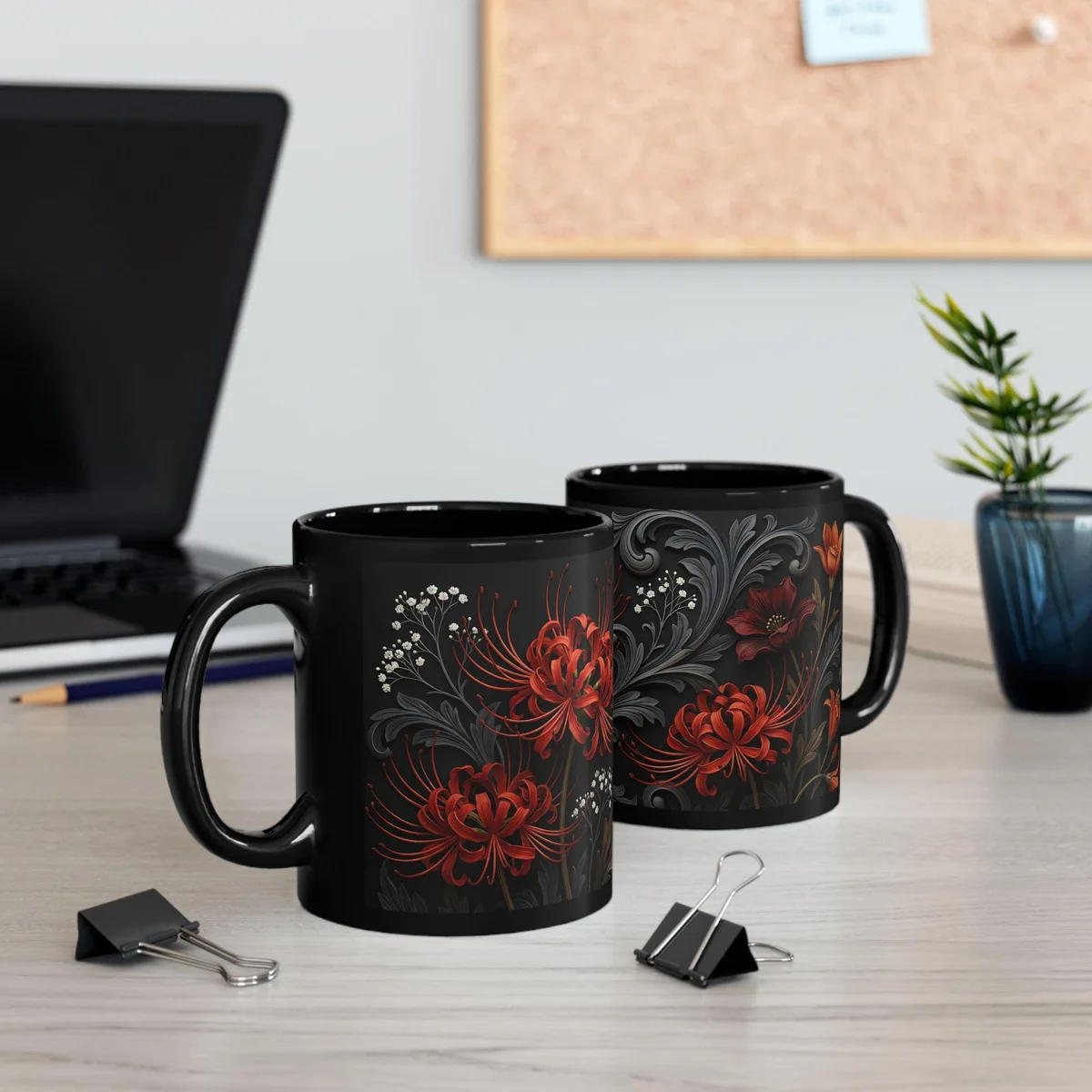
Morning did not so much arrive as gather itself slowly in the corners of the room. The computer sat dark, the blinds still half‑drawn, and on the desk a single object waited with more patience than any alarm: a black mug, cool to the touch, its sides hiding a secret garden. Steam began to rise from it in pale threads, and with that first stir of heat the lilies seemed almost to move.
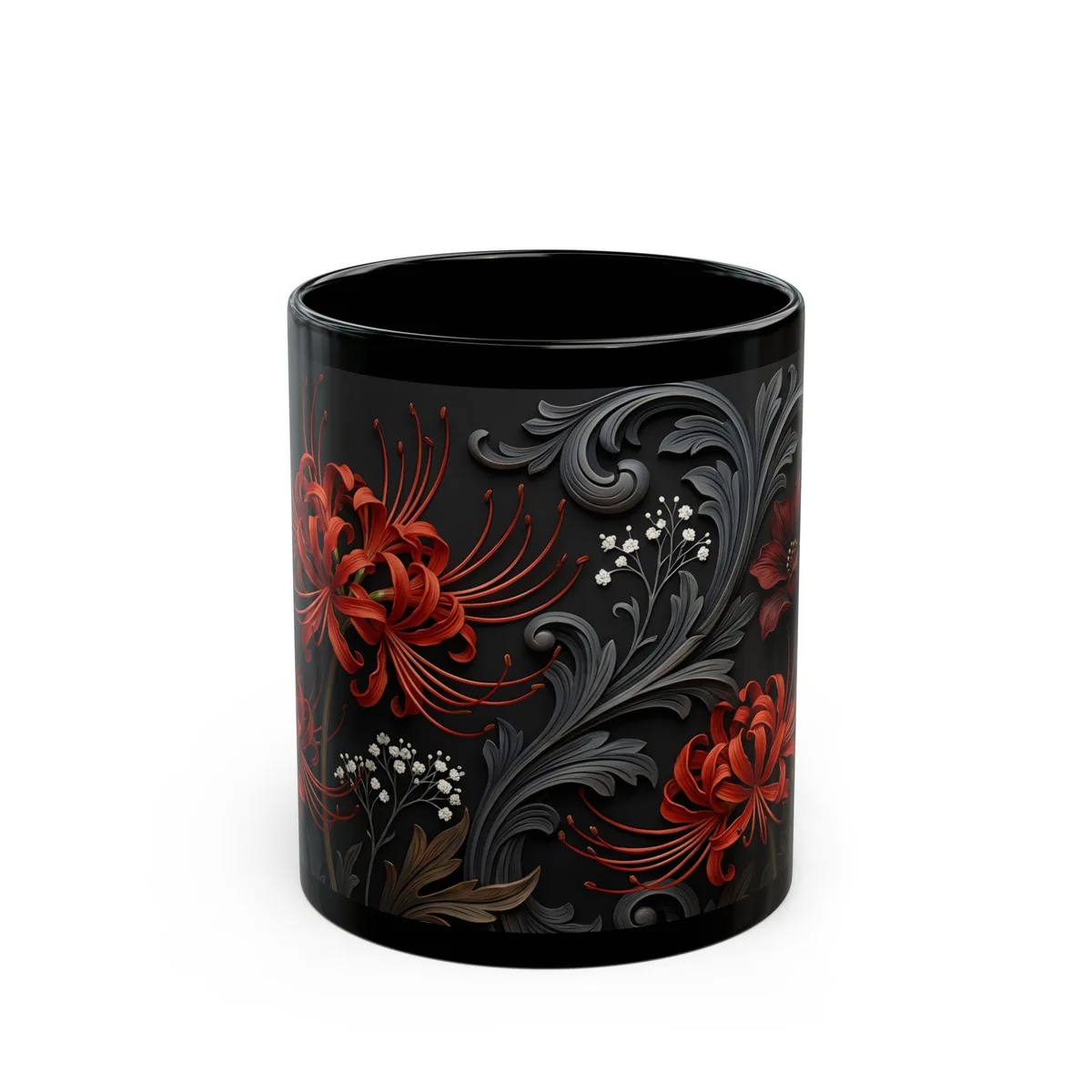
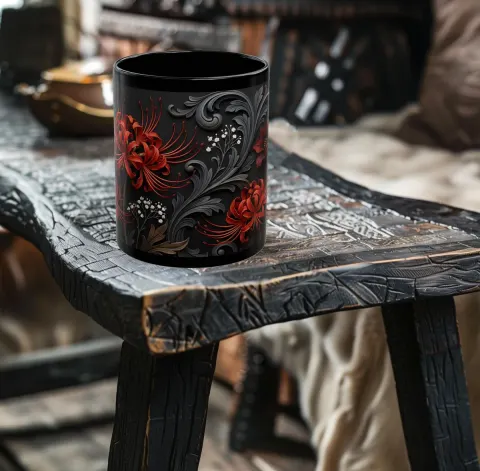
They were not soft, fragile things as in a vase, but decisive, carved in color: red as the first thought you do not quite admit to yourself. Petals flared around the curve of the mug, meeting and parting with every turn of the wrist. Grey leaves and scrolls swam behind them in slow procession, keeping their own counsel, while tiny white blossoms shone like quiet stars caught in the act of listening. Against all this, the black of the ceramic deepened, as if it had decided to be the night in which these flowers must burn.
She wrapped her hands around the heat and let the first sip mark the border between sleep and the busy brightness ahead. The flavor was the same as always—coffee, slightly too strong—but the moment had shifted. The dark garden pressed gently against her palms; the lilies watched with crowded, attentive petals. Emails, meetings, messages would come, but for the span of this cup they seemed to wait outside the room, politely uninvited.
Later, the day would close in again. The monitor would flare to life, keys would chatter an uneven music, and the mug would stand to one side, a little ring of shadow on the desk its only trace. Yet each time she lifted it, the world folded back for a second: the red flowers, persistent and unwithering, the cool curve of ceramic under her fingers, the small, fierce stillness that lives at the bottom of the first swallow.
In this way the mug became more than a container. It was a threshold disguised as a habit, a door she stepped through each morning without ceremony. On one side lay the calendar and its obligations; on the other, the quiet country of her own thoughts, where lilies bloomed under a sky the color of ink and time moved not in minutes but in sips. And if anyone asked why the mug was always the same, why she never tired of its dark extravagance, she could only answer that some objects do not merely hold what we drink—they hold, in their steady, silent way, the person we are while we drink it.
Keep wandering through the storybook