The story behind the design
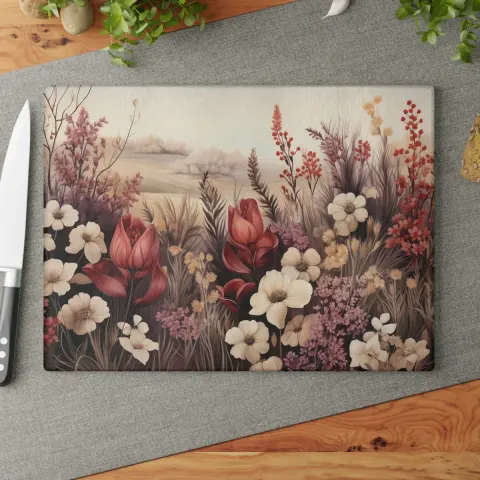
Wildflower Garden
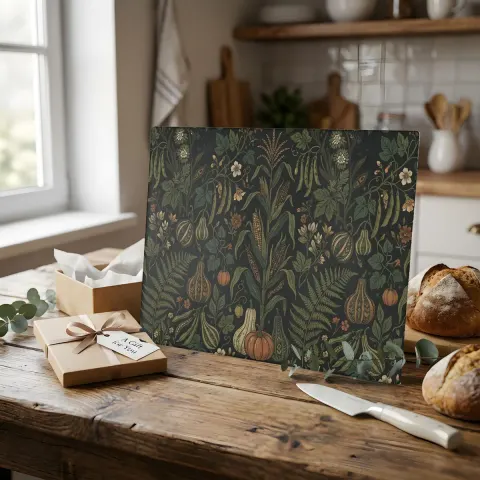
In the small farmhouse kitchen, the evening light came in low and golden, spilling across the worn boards of the floor and the table where vegetables waited in quiet, patient heaps. The garden had been generous that year; baskets of corn and crooked‑necked squash rested beside bowls of peas that still smelled of warm earth and sun.
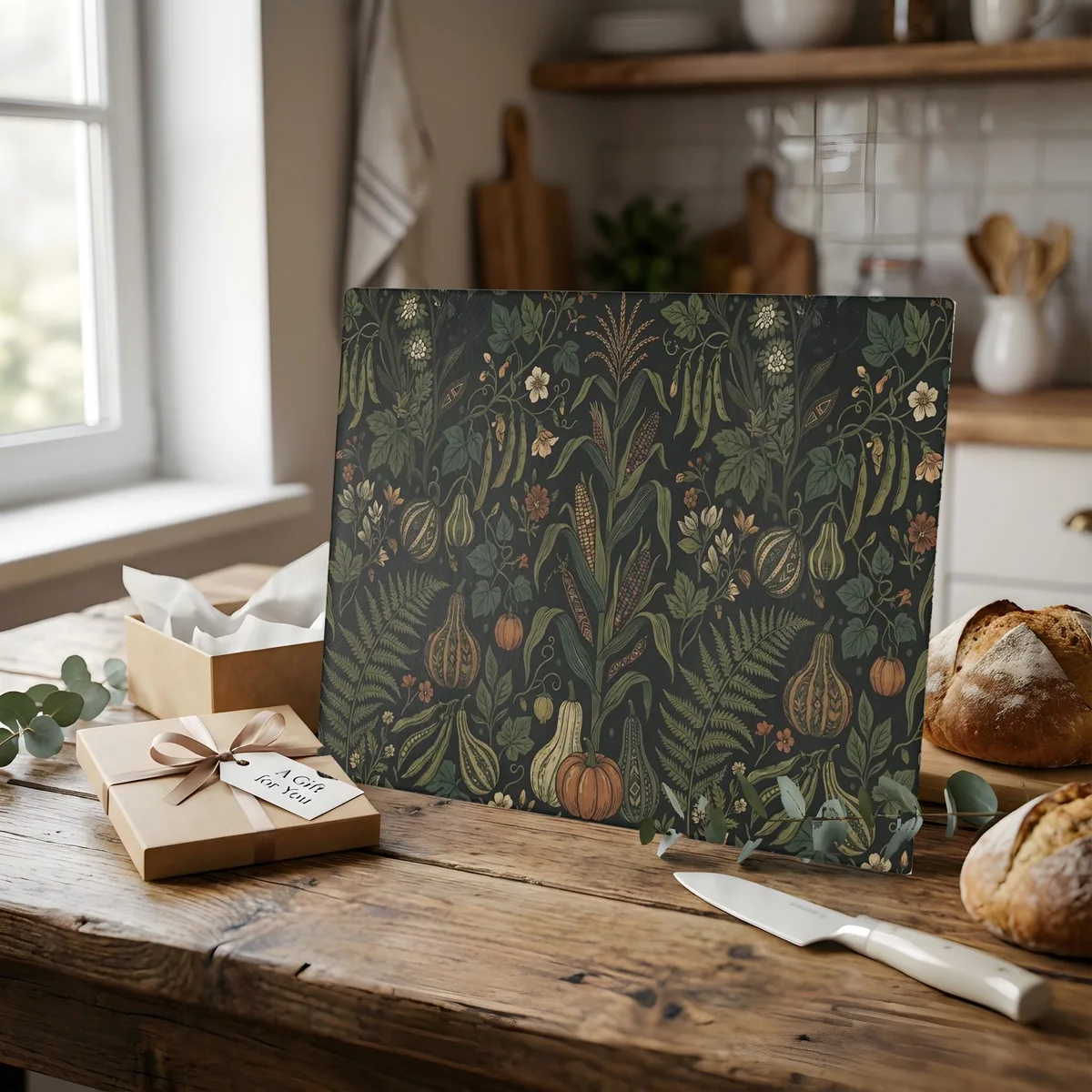
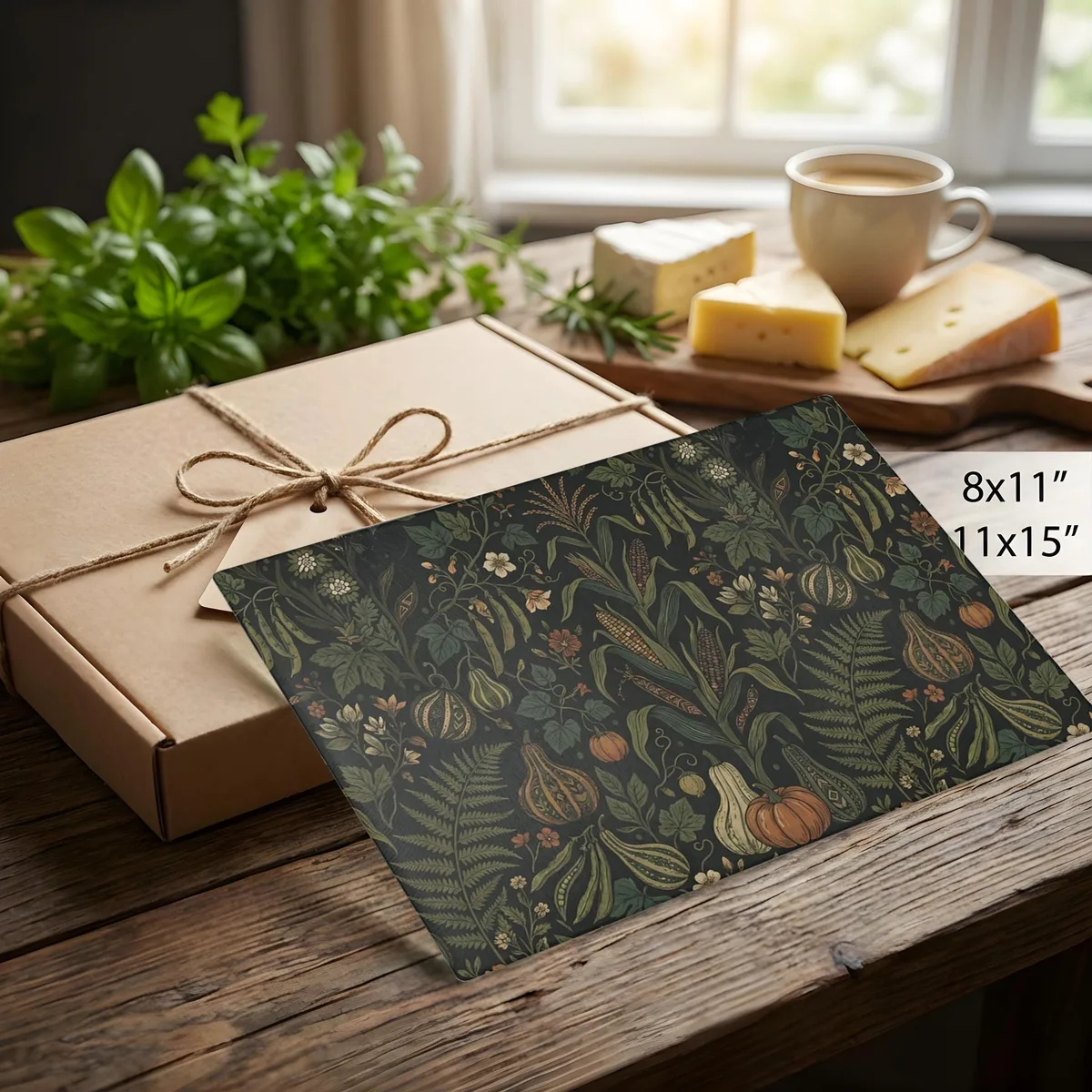
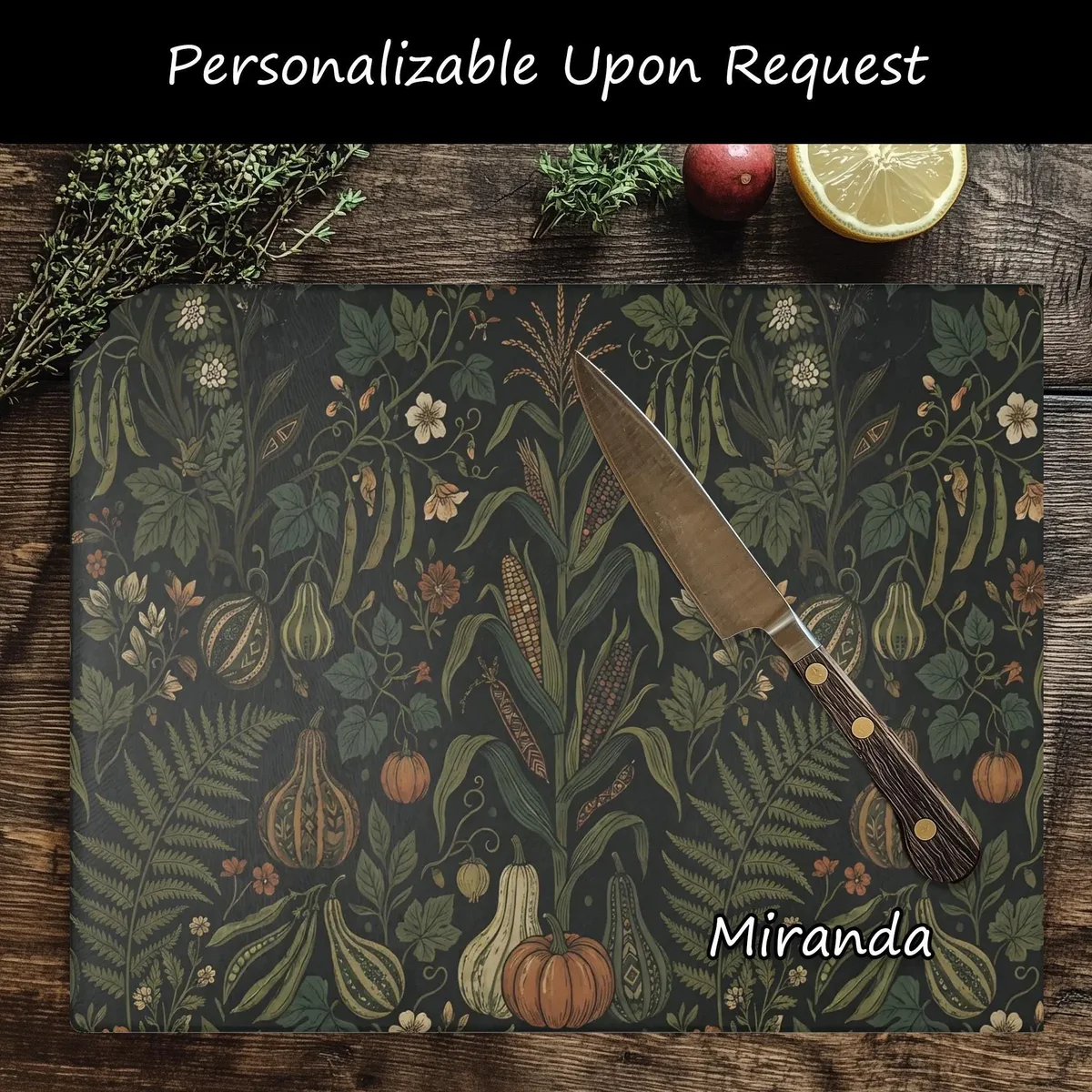
Long before there were glass boards or polished counters, there had been only the wooden table and a sharp knife, and the steady rhythm of hands that knew what to do. Yet on this evening the gardener laid something new between the baskets and the bread—a pane of tempered glass, smooth and cool, beneath which the whole garden seemed to bloom again. Corn stood tall against the dark, pumpkins glowed, and ferns feathered the shadows like green lace.
It was as though a summer afternoon had been pressed there, the way children press leaves in heavy books. Each cut onion, each sliced carrot, fell upon a picture of its own kin, and the work of supper turned suddenly into a kind of remembering. The soft tap of the knife sounded like a respectful knock upon the garden gate.
Sometimes, when there were guests, the board traveled to the dining table and became something else: a small, shining field for cheese and bread, grapes tumbling like beads across the painted vines. Fingers traced the shapes under the glass, following the lines of gourds and pea pods, and talk turned easily to seeds saved, storms weathered, and the miracle of how much can grow from one small packet.
On days when no one cooked and the stove stayed cold, the board still shone quietly on the counter, holding the light from the window like a shallow pool. It reminded the gardener that even in deep winter, when the beds outside slept under frost, there was a season folded safely inside every seed and every memory of harvest.
In this way, the glass cutting board became more than a tool. It was a little, luminous bridge between the soil and the soup pot, between the weather and the warm kitchen, between the work of the hands and the comfort of the heart—just the sort of homely magic Laura Ingalls Wilder might have written about, had she known the pleasure of a garden captured under glass.
Keep wandering through the storybook