The story behind the design
Heirloom Florals
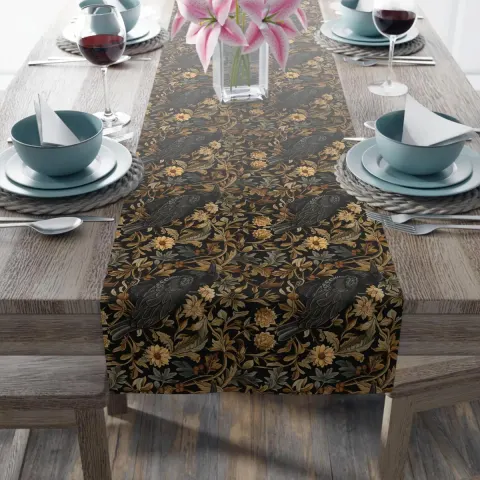
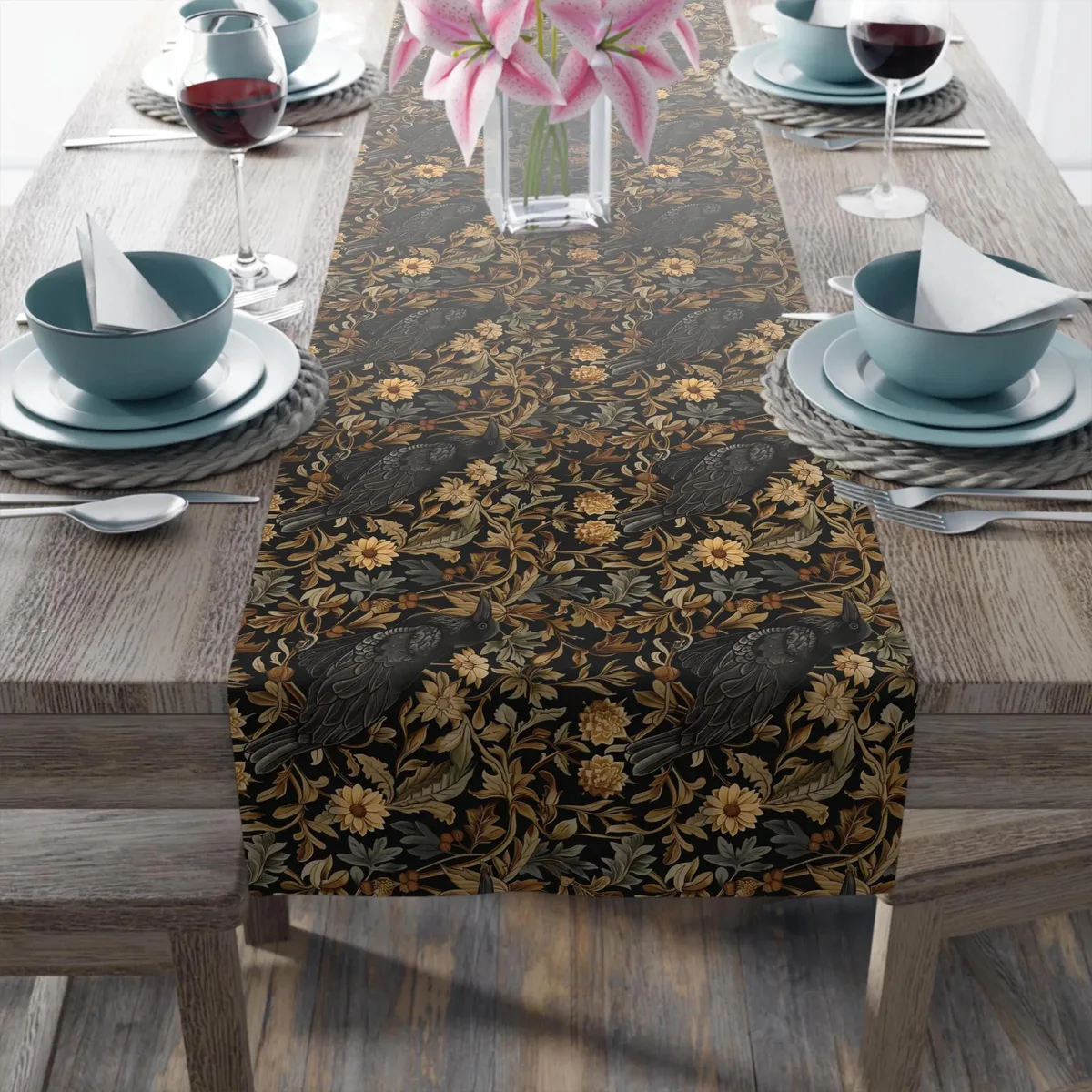
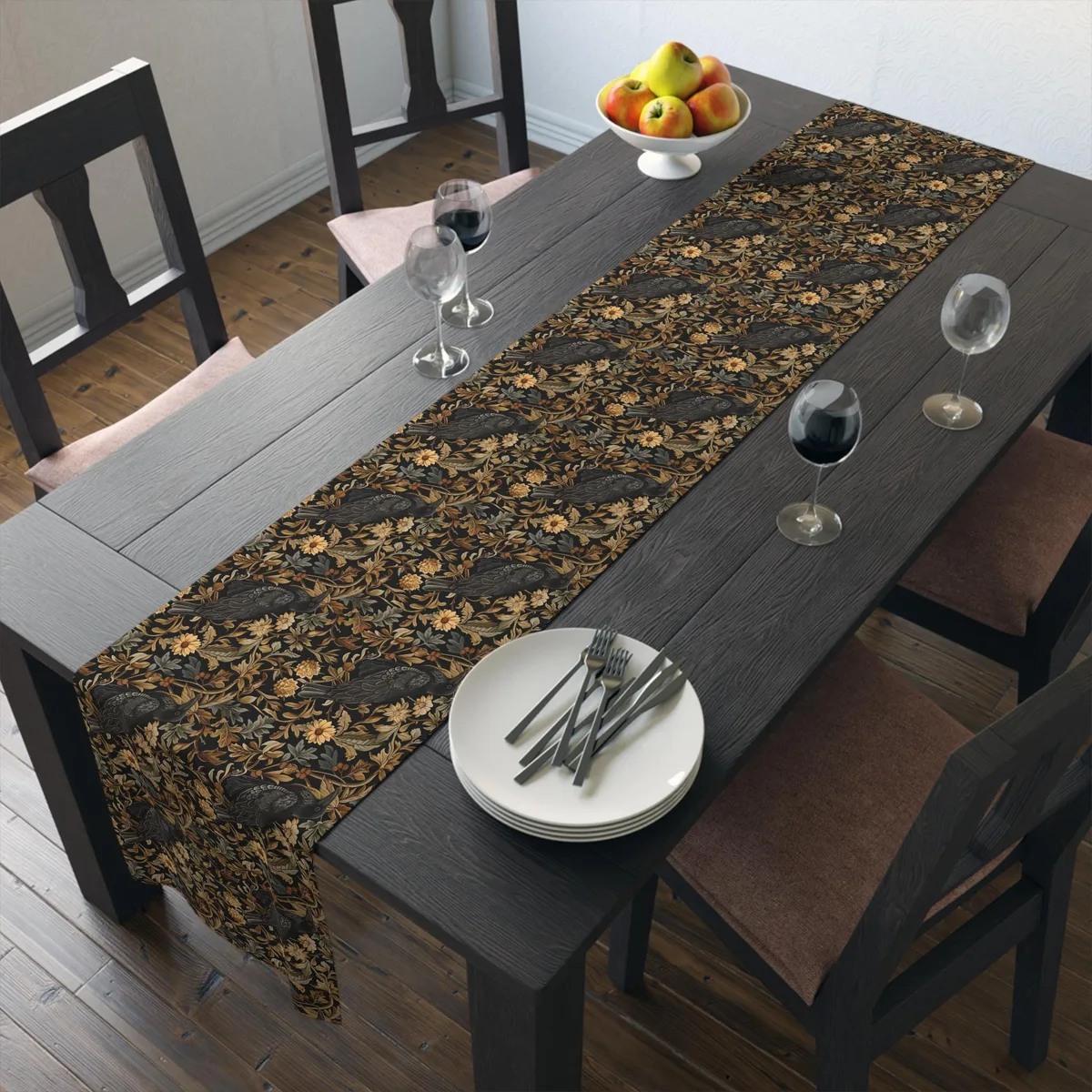
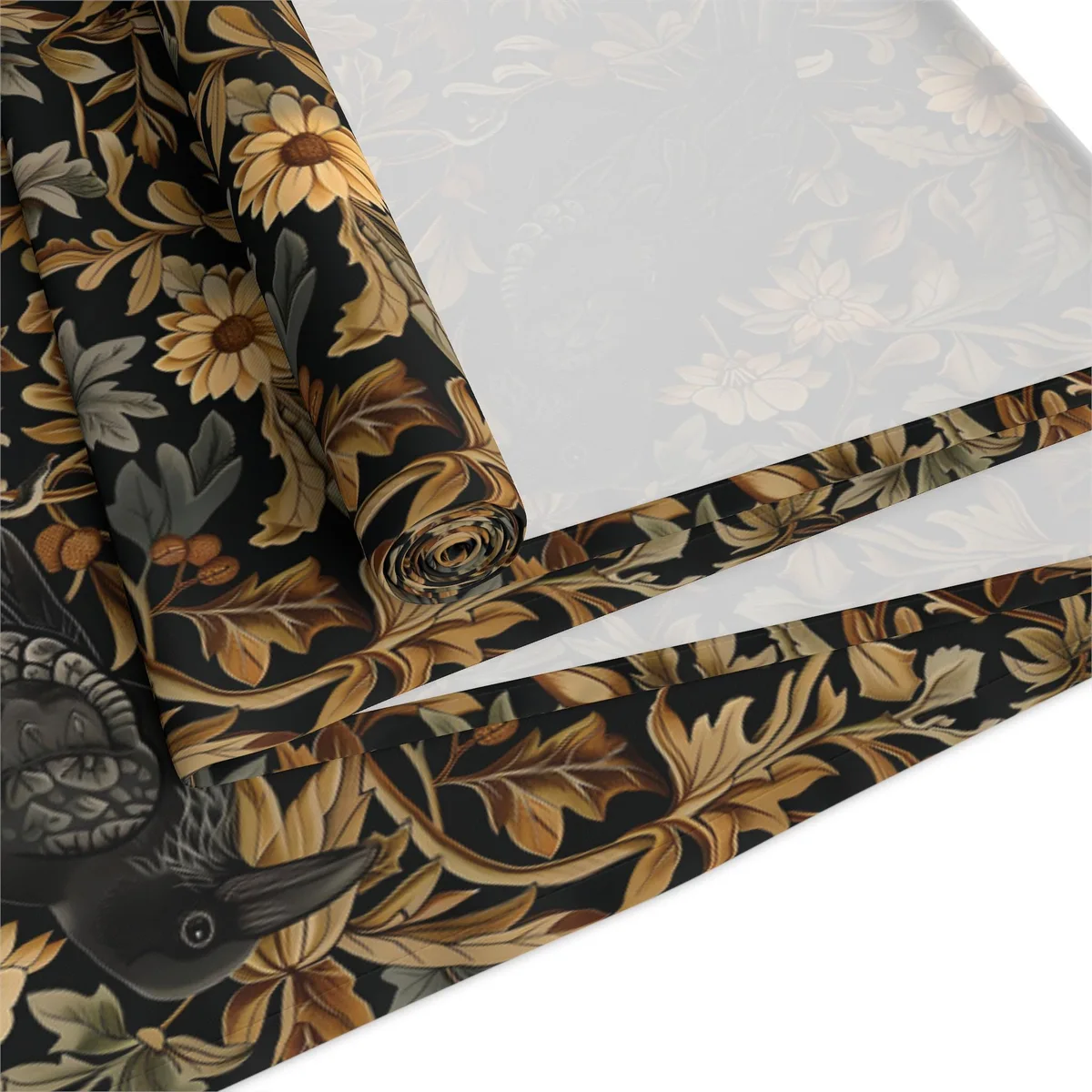
The ancient oak table, usually a stark plane of weathered wood, was now cloaked in a tapestry of muted splendor. A long, dark runner, woven with threads the color of midnight and aged gold, stretched its length, transforming the commonplace into a canvas of forgotten tales. Upon its surface, stylized crows, their feathers shimmering with an imagined iridescence, perched amidst a riot of floral patterns, each bloom a miniature sunburst or a hidden violet.
These weren't mere birds but guardians, watchers from a time when the veil between worlds was thinner, when whispers carried on the wind held potent truths. Their obsidian eyes, though painted, seemed to hold a flicker of knowing, a silent testimony to the countless feasts, solemn discussions, and joyful laughter that had unfolded above and around their printed forms. They were the constant, silent observers, their presence a grounding influence amidst the fleeting moments of human celebration.
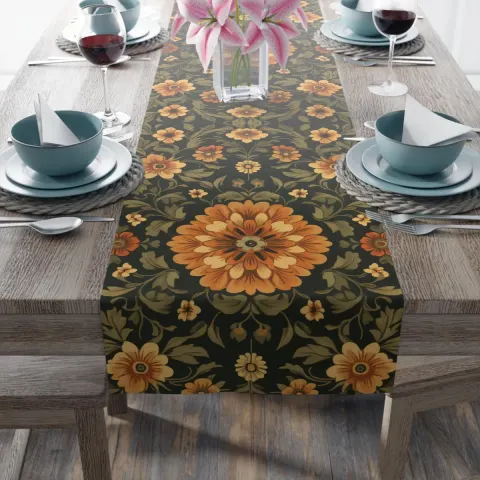
The flowers, rendered in hues of faded amber, burnt orange, and deep moss green, appeared to still hold the scent of an ancient summer. They were not fragile blossoms but robust, hardy blooms, twisting and intertwining with a wild, untamed grace. Each petal and leaf spoke of resilience, of beauty found not in perfection, but in growth that defied the odds, reaching for light even in shaded corners. They whispered of forgotten gardens and secret groves where magic still bloomed.
Beneath the steady gaze of the printed ravens and the embrace of the woven flora, mundane objects of utility transformed. The polished ceramic bowls became vessels for enchanted brews, the simple silverware instruments for crafting spells, and the wine, deep red in its goblet, a nectar for conjuring forgotten memories. The runner was not just an adornment; it was an invitation, a portal to a time when art was infused with meaning, and every motif held a silent narrative.
One could almost hear the rustle of wings, the faint chirping of unseen insects, and the distant drone of a lute as they gazed upon the intricate design. It evoked an era when storytelling was etched into every artifact, when the natural world and the human spirit were inextricably linked. The runner was a fragment of that tapestry, a tangible connection to the enduring power of ancient symbols and the beauty found in the often-overlooked details.
It was a reminder that even in the midst of everyday life, there exist pockets of profound beauty, moments of quiet magic waiting to be discovered. The artistry spoke of patience, of meticulous hands that understood the interplay of light and shadow, and the enduring allure of narratives crafted through pattern and form. It encouraged a deeper look, an appreciation for the stories whispered by threads and dyes.
As the light shifted, catching the subtle sheen of the fabric, the crows seemed to settle deeper into their floral perches, their forms gaining a dimensionality that defied their flat surface. The flowers appeared to pulse with a hidden energy, their colors deepening and lightening with an ethereal rhythm. It was a dynamic stillness, a frozen moment of breathtaking life captured forever in textile.
Indeed, the runner was more than a mere decoration. It was a heart, beating softly at the center of the table, infusing the space with an ancient charm and an inviting warmth. It was a testament to the enduring power of art to transport, to inspire, and to connect us to the deeper currents of history and imagination, proving that true beauty can transform the most ordinary setting into a stage for extraordinary contemplation.
Keep wandering through the storybook