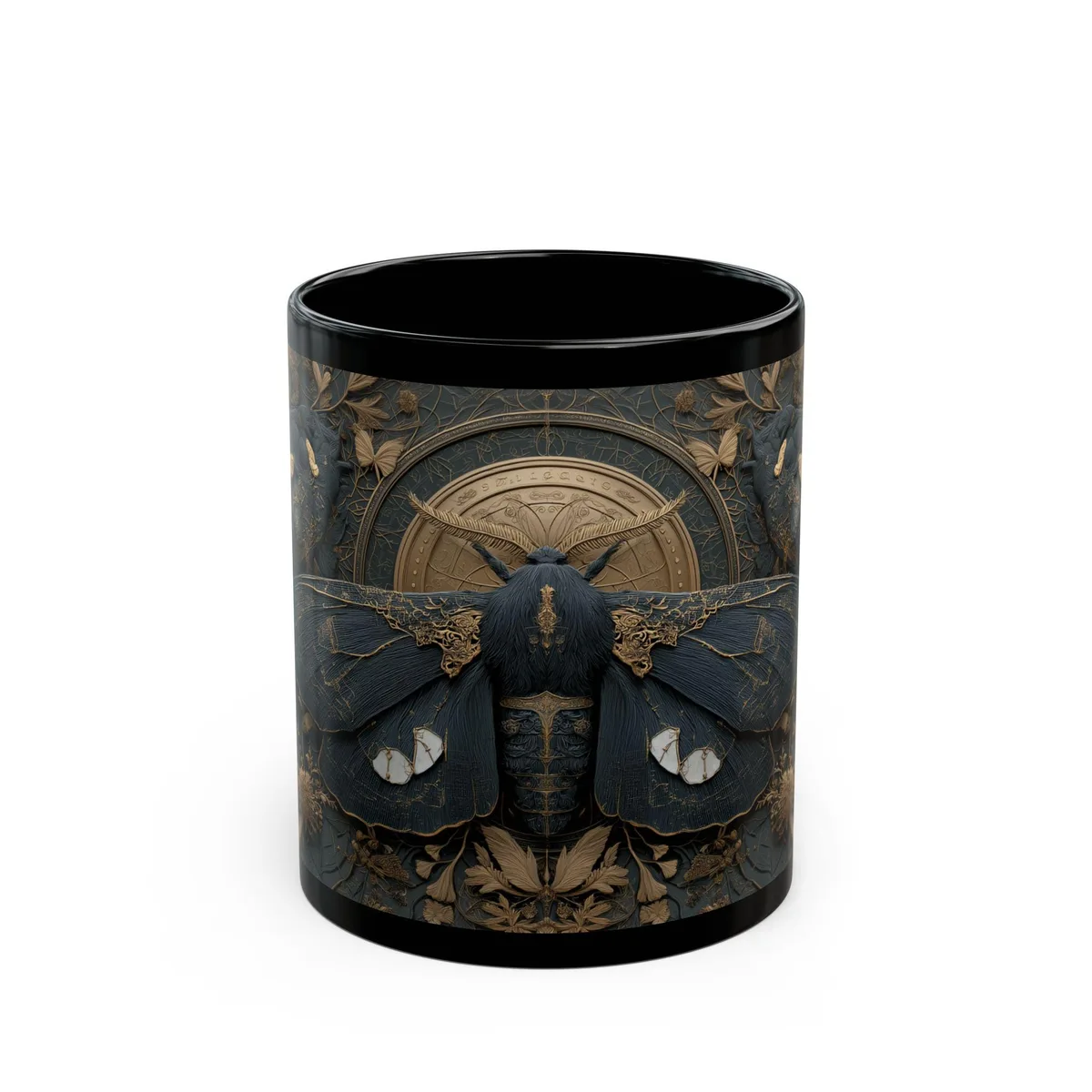


The story behind the design
Moonlit Garden
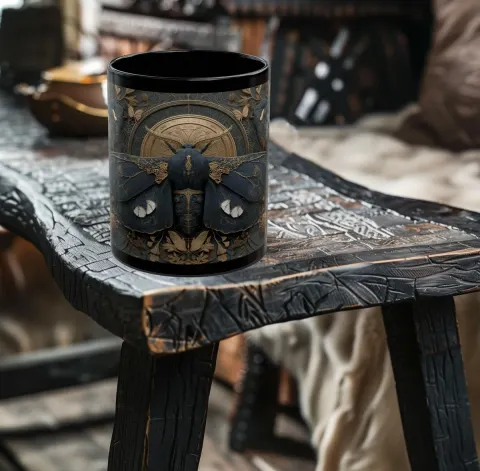
In the heart of a kingdom cloaked in perpetually twilight skies, where gnarled oaks wept moss and ancient stones whispered forgotten tales, lived a solitary illuminator. Her name was Wren, and her days were spent hunched over parchment, her delicate hands weaving intricate patterns of gold leaf and deep indigo ink. The castle she resided in was a labyrinth of shadows and soaring arches, each crevice a testament to centuries past, and its inhabitants often spoke of a strange, ethereal creature that flitted through the moonlit halls – a moth, unlike any other.
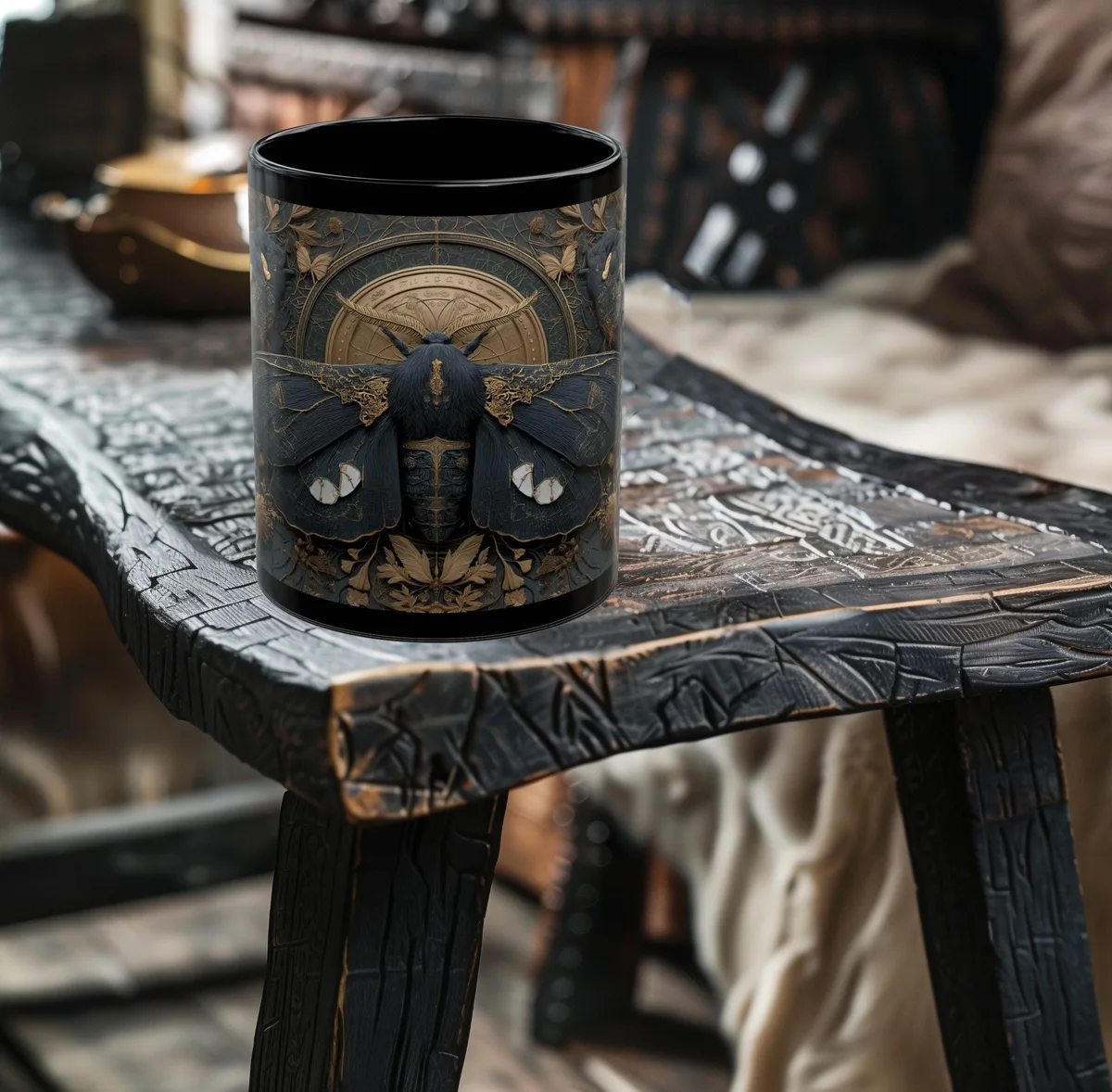
This was no ordinary moth of the hearth or field. Its wings, though dark as a raven's plume, shimmered with an inner luminescence, revealing patterns of astonishing complexity. Like ancient tapestries woven by fae hands, geometric designs in muted gold and silver traced its broad span, hinting at a hidden language or celestial map. It was said that to glimpse this magnificent creature was to be blessed, or perhaps, subtly cursed, for its presence evoked a sense of profound wonder tinged with a delicate melancholy.
Wren, with her artist's eye, had often tried to capture the essence of this luminous night-flier in her illuminated manuscripts. She sketched its regal antennae, delicately curved like elfin crowns, and the deep, velvet sheen of its body. But always, she found her human hand unable to recreate the subtle, otherworldly glow that emanated from its scales, a light that seemed to absorb and reflect the very essence of the moon itself.
One night, as a storm raged outside and the castle groaned under the fierce wind, Wren sat by a flickering tallow candle, attempting to illustrate a particularly challenging passage. Her spirit felt heavy, burdened by the endless repetition of historical accounts and the weight of the encroaching darkness. It was then that the moth appeared, seemingly out of the very air, and landed gently on the edge of her parchment.
Its large, dark eyes, like polished obsidian, seemed to peer into her very soul, and for a long moment, Wren felt an inexplicable connection to the creature. Its golden markings, usually seen as abstract patterns, now seemed to pulse with a low, resonant energy, revealing snippets of ancient script and constellations known only to forgotten stargazers. It was as if the moth was a living, breathing relic, a silent testament to secrets guarded by the very fabric of time.
As Wren watched, mesmerized, the moth unfurled its wings, and for an instant, the faint moonlight piercing the stormy clouds seemed to coalesce upon them. The golden patterns blazed, not with a harsh brightness, but with a warm, comforting light that chased away the shadows from Wren's immediate surroundings. It was a light that spoke of resilience, of beauty found in the deepest night, and of the profound mystery that binds all things.
In that moment of shared quietude, Wren understood. The moth was more than just a creature of the night; it was a symbol, a sentinel of the enduring spirit that thrives in darkness, a silent guardian of the ancient magic that wove through the castle's very stones. It was a reminder that even in the most shadowed corners of the world, there resided an inherent, intricate beauty, waiting to be seen, to be appreciated, to be rendered by hands that truly understood its ethereal essence.
Inspired anew, Wren painstakingly began to adapt her artistic techniques. She experimented with pulverized gemstones for pigment, seeking to mimic the moth's elusive glow. She layered gold leaf with such precision that it seemed to breathe on the page, catching the light in a dance of shadows and brilliance. She learned to embrace the dark hues, understanding that they were not merely an absence of light, but a profound canvas upon which true beauty could reveal itself.
From that night forward, Wren's illuminations transformed. Her new works, though still steeped in the gothic aesthetics of her world, carried an undeniable spark of life, a golden warmth that radiated from within the dark depths of the imagery. Her art became a beacon, guiding others to a deeper appreciation of the subtle wonders that lay hidden in plain sight, much like the silent, majestic moth that continued its graceful vigil within the ancient castle walls.
Keep wandering through the storybook