The story behind the design
Heirloom Florals
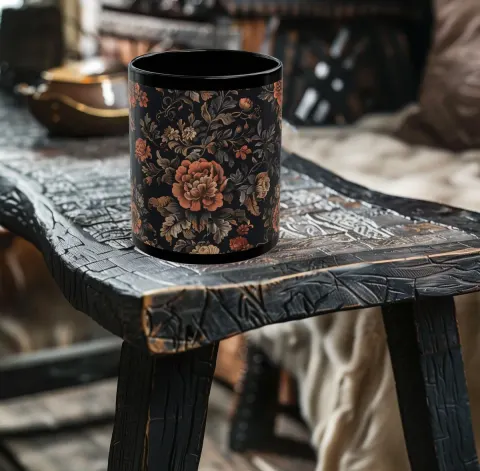
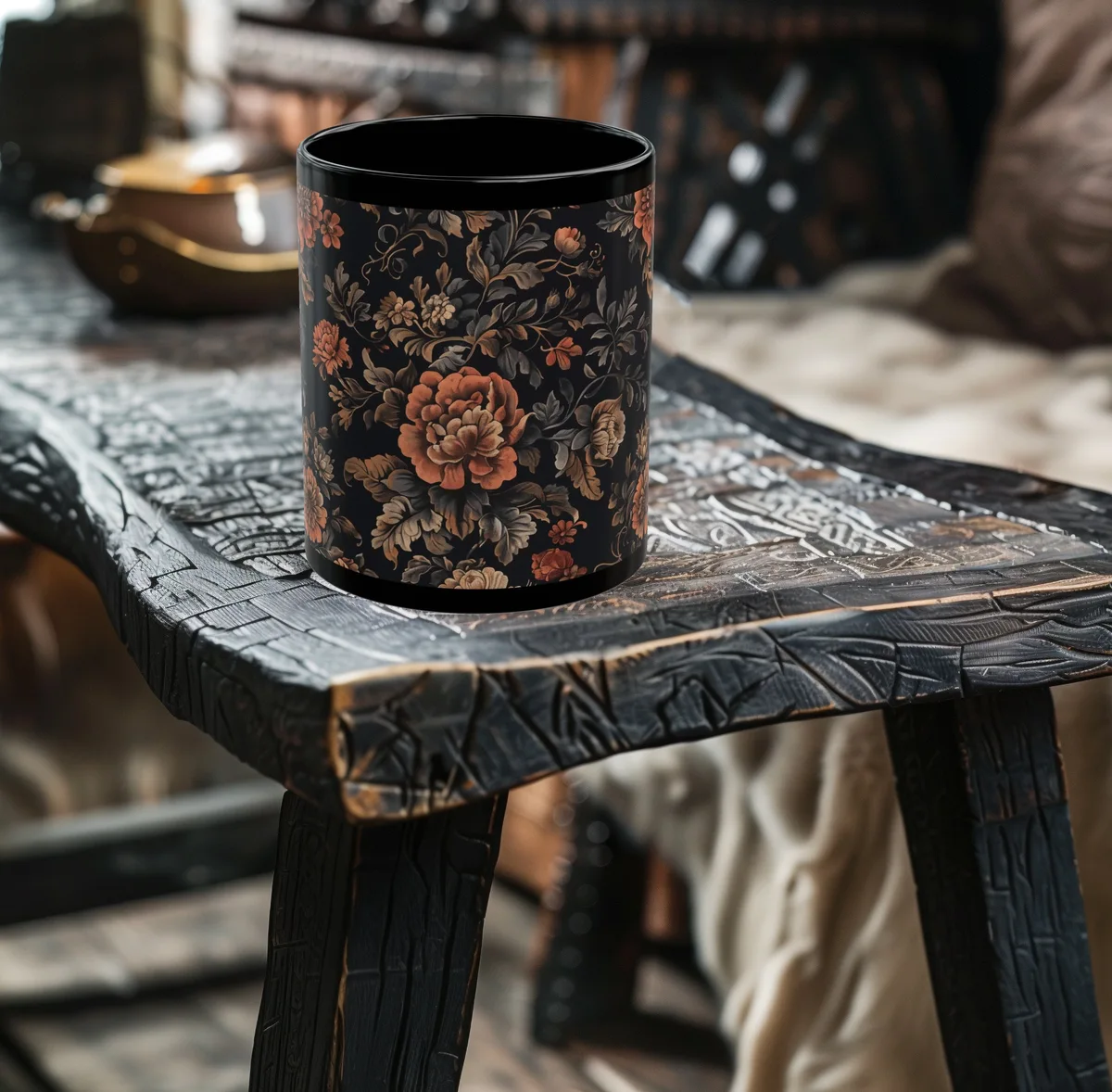
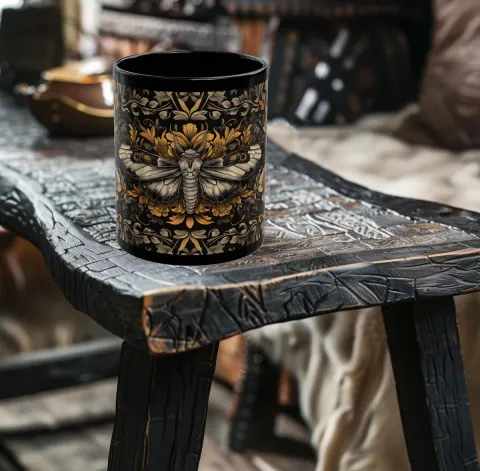
In a realm where time flowed like molten amber, and the whispers of ancient forests carried forgotten tales, there existed a vessel. Not merely a simple container for sustenance, but a canvas upon which the echoes of a bygone era were etched. It rested upon a weathered bench, its dark wood scarred by countless seasons, each gouge and grain a testament to enduring strength, much like the spirit of the lands it observed. The air around it, though still, seemed to hum with the muted echoes of medieval minstrels and the rustle of forgotten tapestries.
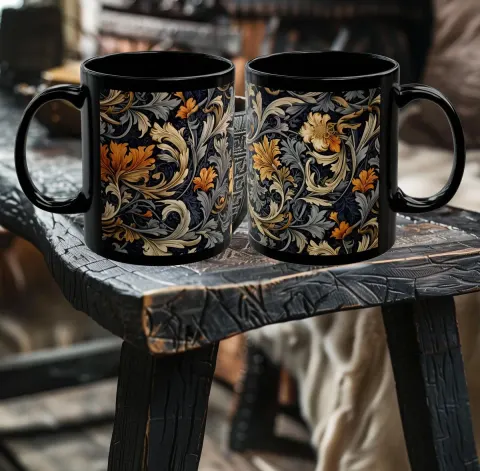
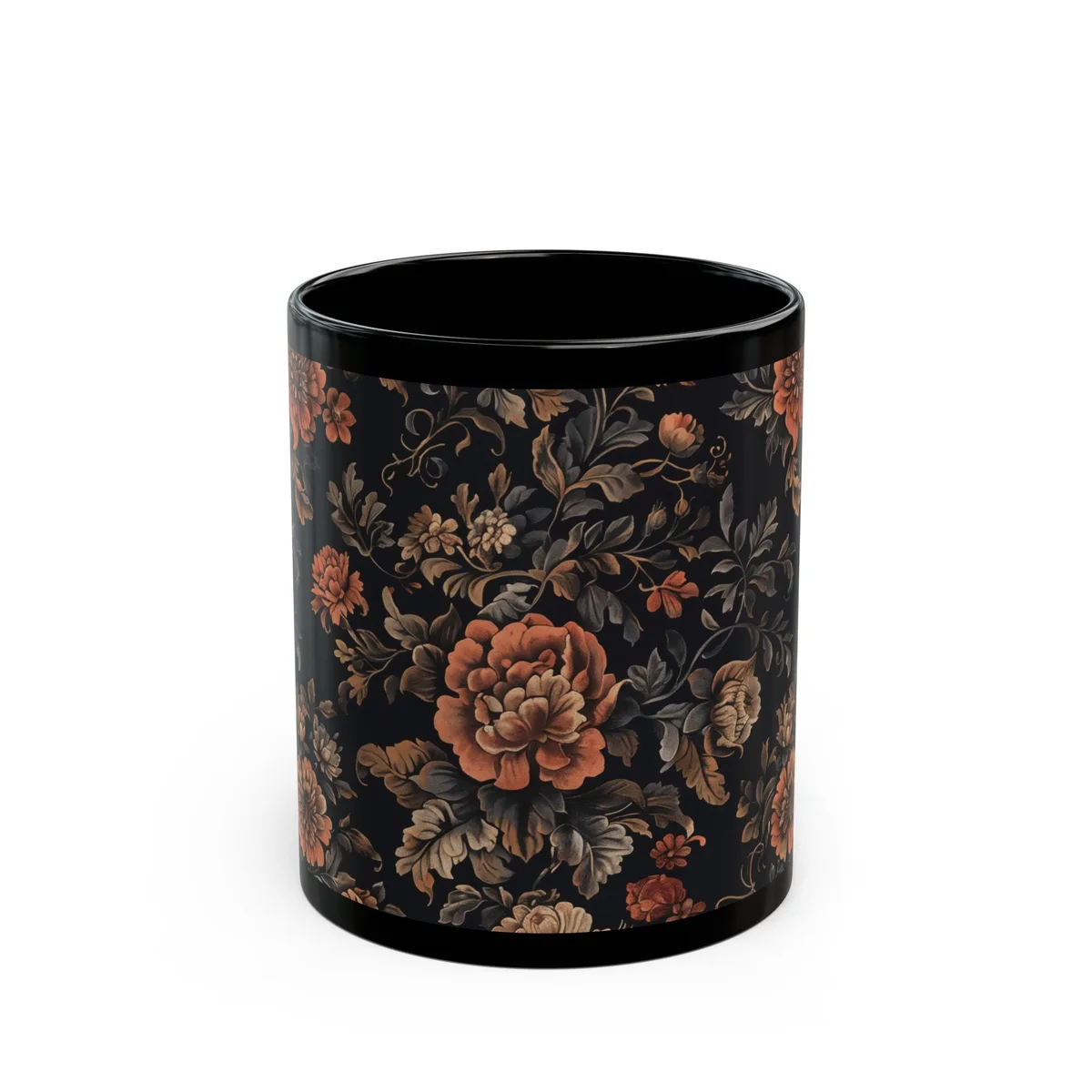
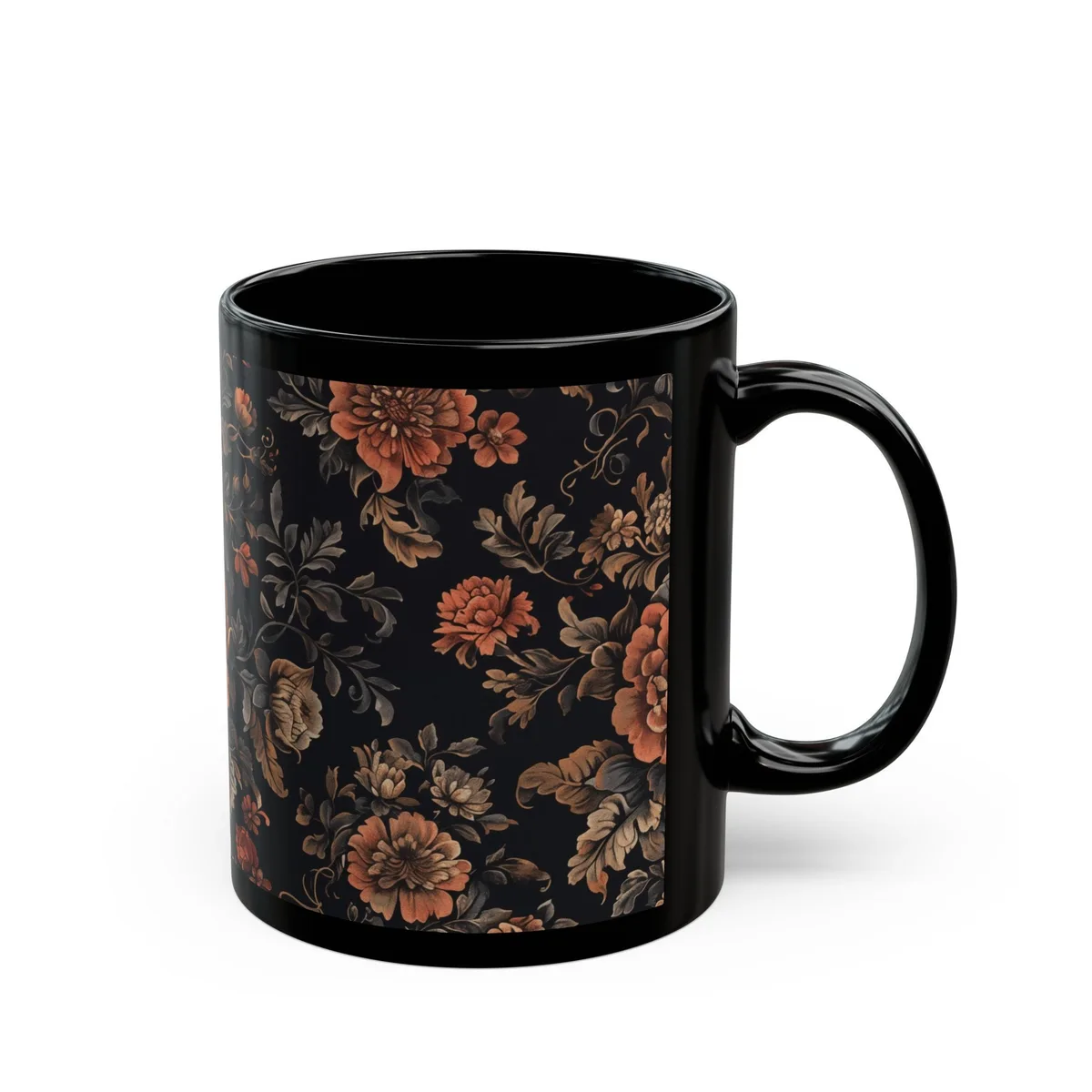
This vessel, adorned with a riot of floral motifs, was a microcosm of the wild beauty that once roamed free across rolling hills and shadowed valleys. Deep, earthy hues – rust, ochre, and moss green – intertwined with the midnight black of its body, creating a tapestry of color that spoke of fertile earth and twilight glades. Each petal, each leaf, was rendered with an archaic grace, suggesting not a fleeting blossom but a timeless symbol, a language understood universally by hearts attuned to nature's profound artistry.
The flowers themselves, robust and unyielding in their painted form, held stories within their intricate patterns. They were not the delicate blooms of pampered gardens but hardy, resilient specimens, reminiscent of those that might have adorned the cloaks of knights or been woven into the hair of wise women. They evoked an era of strength and simple, enduring elegance, where beauty was found not in fragile perfection, but in the raw, unfettered spirit of the natural world.
One could almost hear the distant clang of a blacksmith's hammer, or imagine the flickering candlelight in a castle hall as one gazed upon its surface. It whispered of grand feasts and solemn vows, of quiet contemplation in forgotten courtyards, and of moments shared over communal fires where stories were spun and fates were woven. The vessel was a silent spectator to history, a keeper of the human spirit's enduring quest for beauty amidst the ruggedness of life.
The light that touched it was soft, diffuse, as if filtered through the stained-glass windows of an ancient abbey. It illuminated the subtle imperfections in its design, the slight variations in hue, which only served to deepen its character and authenticity. This was not a product of sterile machinery, but of hands guided by tradition and a heart imbued with reverence for the aesthetic. Each brushstroke, though unseen, held the ghost of an ancestral touch.
Though simple in its function, its presence imbued the space with a sense of grounded tranquility and profound artistry. It was a bridge between the tangible and the ethereal, a reminder that even the most mundane objects can be vessels for profound meaning and echoes of a rich heritage. It invited a contemplative pause, a moment to appreciate the enduring power of craftsmanship and the silent narratives etched into the very fabric of existence.
It sat, not as an object of material desire, but as an artifact of inspiration. It stirred the imagination, painting vivid pictures of a world where artistry was woven into daily life, where beauty was respected as a fundamental truth, and where the echoes of ancient tales still resonated in the quiet corners of the heart. It was a silent invitation to find strength in tradition, and beauty in the enduring spirit of creation.
Keep wandering through the storybook