The story behind the design
Heirloom Florals
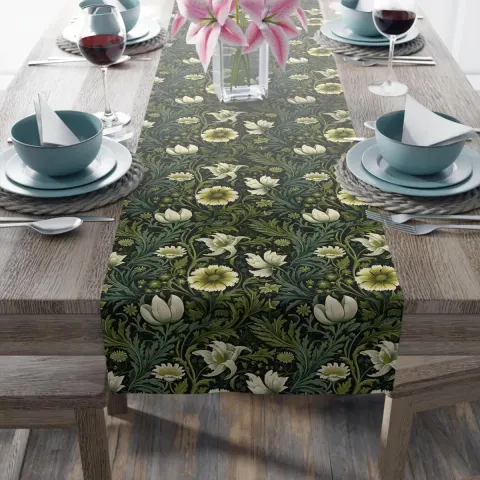
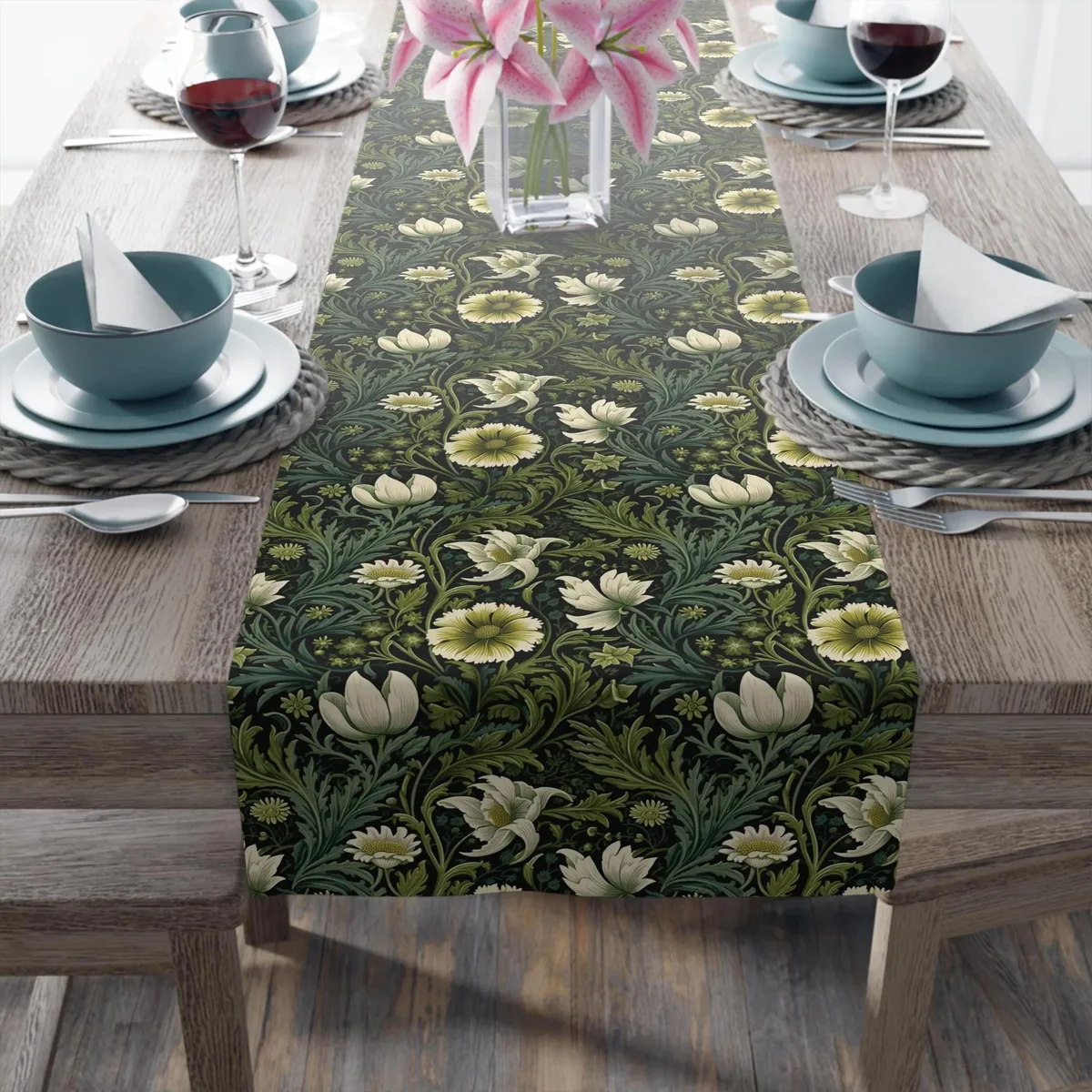
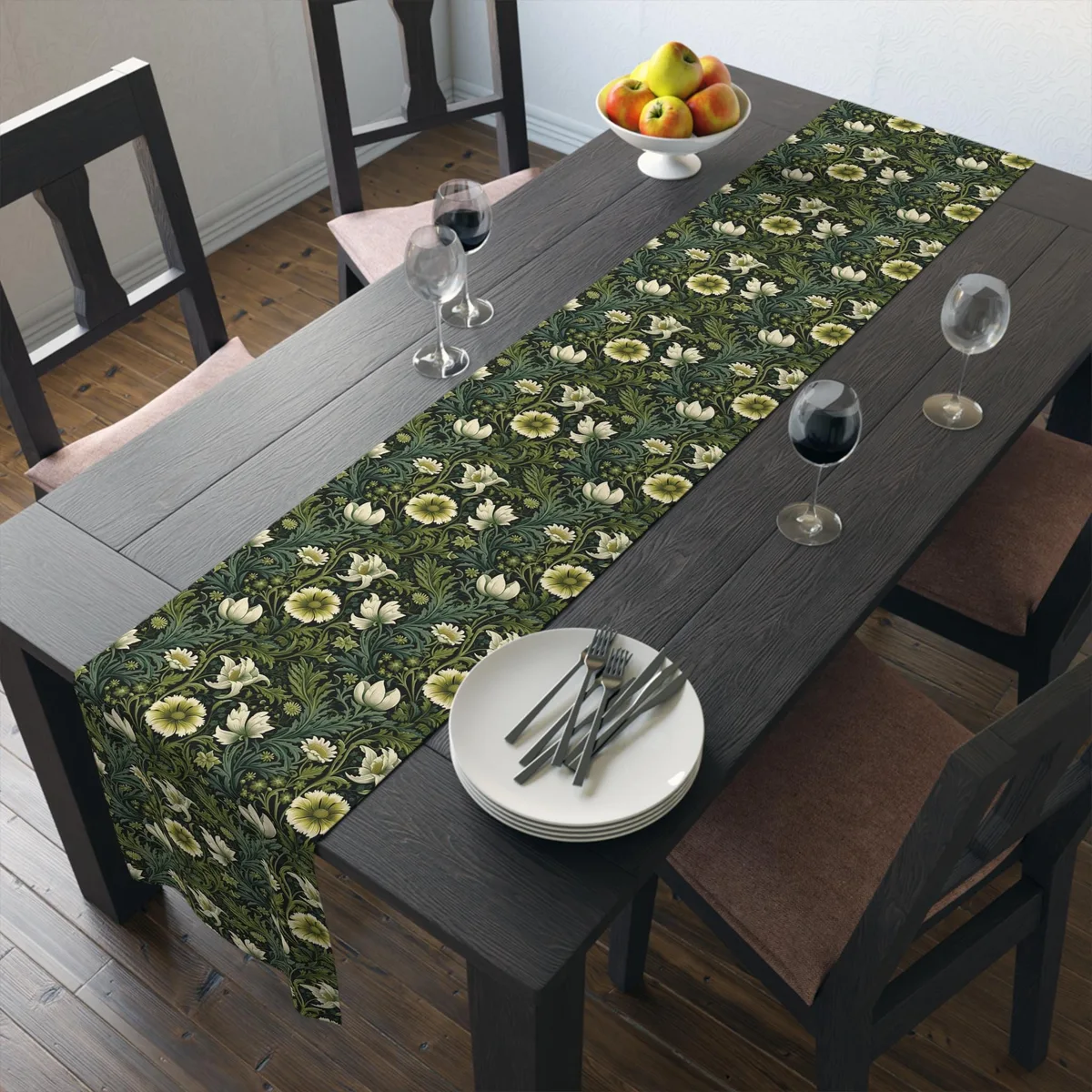
In a forgotten corner of an old country house, tucked away behind dusty velvet drapes and beneath the watchful gaze of ancestors enshrined in oil portraits, lay a table runner. It wasn’t just any piece of fabric; it was a woven whisper of a bygone era, a tapestry of midnight green and muted gold, alive with the spiraling dance of stylized flora. Each leaf, every unfurling petal, seemed to hum with the gentle cadence of a secret garden, a place where the wild beauty of nature had been captured and immortalized in thread.
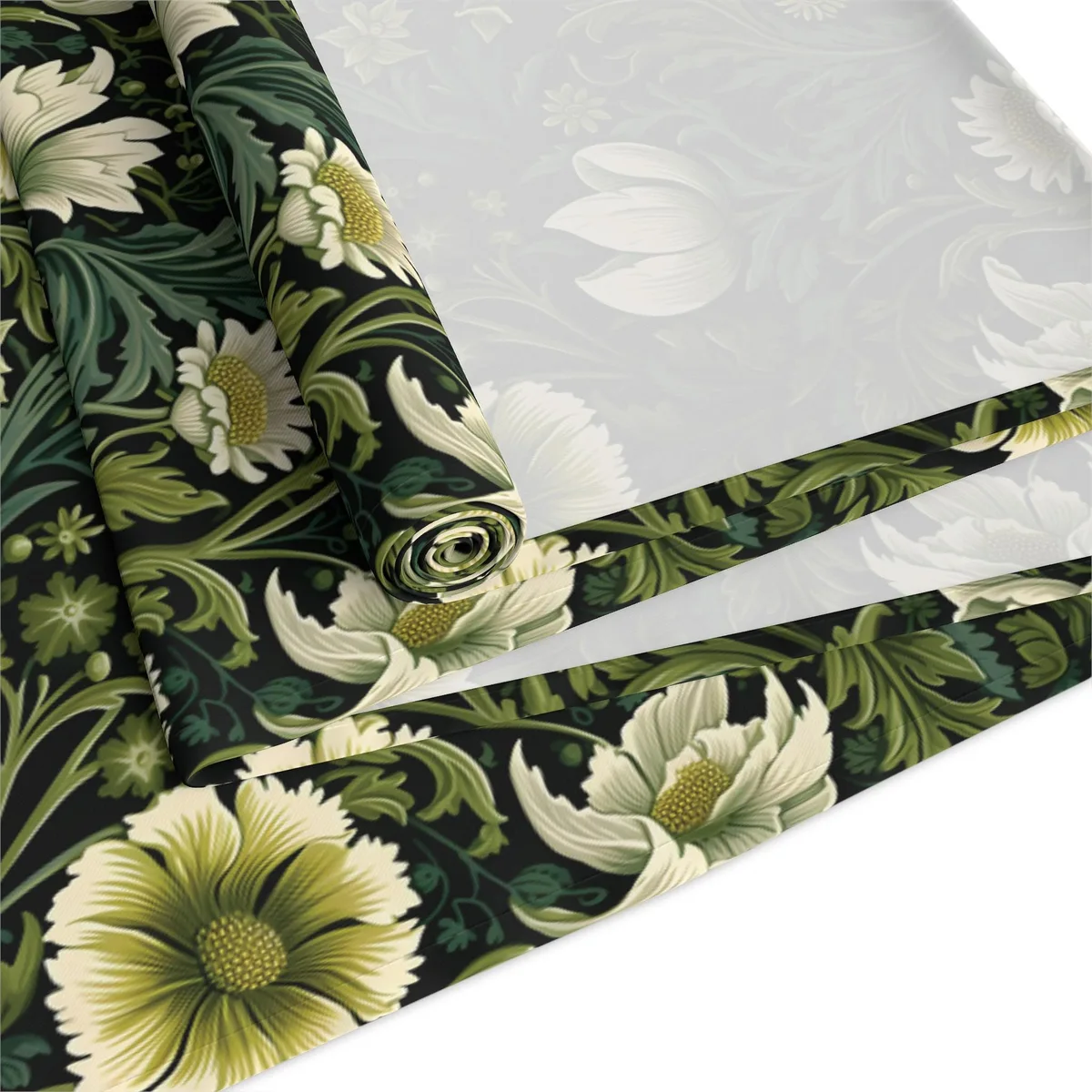
The patterns upon its surface were more than mere decoration; they were a language spoken in contours and curves, a dialogue between the earth and the heavens. Ferns, intricate and delicate, intertwined with plump, blossoming flowers, their petals catching the light in shades of creamy white and softest buttercup. It was as if a fae gardener, with an artist's eye and a poet's soul, had coaxed these forms from the soil, then etched their ethereal essence onto the very cloth, reminding all who gazed upon it of the enduring grace of the natural world.
This runner, though silent, held countless stories within its intricate weave. It had witnessed generations of hands reaching across its surface for bread, for wine, for the reassuring touch of a loved one. It had absorbed the echoes of joyous laughter at celebrations, the hushed murmurs of comfort during times of sorrow, and the eager anticipation of countless meals shared in camaraderie. Each stain, each faint threadbare patch, was a testament to the passage of time, a tiny scar etched by the vibrant currents of life.
Yet, despite the passage of years, the runner’s spirit remained undimmed. Its patterns still held the power to transport the mind to sun-dappled glades and mossy dells, to evoke the scent of damp earth after a spring rain, and the murmur of leaves in a gentle breeze. It was a bridge between the domesticity of the dining table and the boundless freedom of the untamed wilderness, a constant invitation to seek beauty and order in both the grand and the humble aspects of existence.
One day, a quiet soul, drawn by an inexplicable pull, discovered the runner. Their fingers traced the delicate embroidery, feeling the subtle raised texture of the patterns. As they unfolded it, the rich colors seemed to blossom anew, casting a gentle glow that filled the otherwise silent room with a sense of vibrant life. It was a tangible connection to a past rich in artistry and appreciation for the organic forms that inspire awe and tranquility.
The runner was carefully placed upon a table, not merely as a utilitarian object, but as a gateway. When guests gathered, their eyes would often linger on the intricate design, finding solace and wonder in its patterns. Conversations would often drift to the beauty of nature, to the delicate balance of life, and to the enduring appeal of craftsmanship that speaks to the heart rather than just the eye. It became a silent centerpiece, a humble masterpiece that anchored the room in a feeling of warmth and timeless elegance.
And so, the William Morris-inspired runner continued its quiet vigil, a testament to the idea that true beauty is not fleeting but eternally resonant. It reminded all who encountered it that even in the most everyday objects, a profound artistry can be found, a vibrant connection to the earth's boundless creativity, and a perpetual whisper of inspiration for those willing to listen. Its intricate dance of flowers and ferns was a perpetual promise of renewal, a steadfast symbol of growth and enduring grace.
Keep wandering through the storybook