The story behind the design
Moonlit Garden
The dining room was narrow, but the evenings made it feel larger. When the lamp above the table bloomed into its soft circle of light, the walls stepped back a little, and the small apartment surrendered the illusion of being only a place to pass through. Tonight, the plates waited in their familiar stack, the cutlery glinted with modest expectation, and upon the table a garden, dark as ink, had quietly taken root.
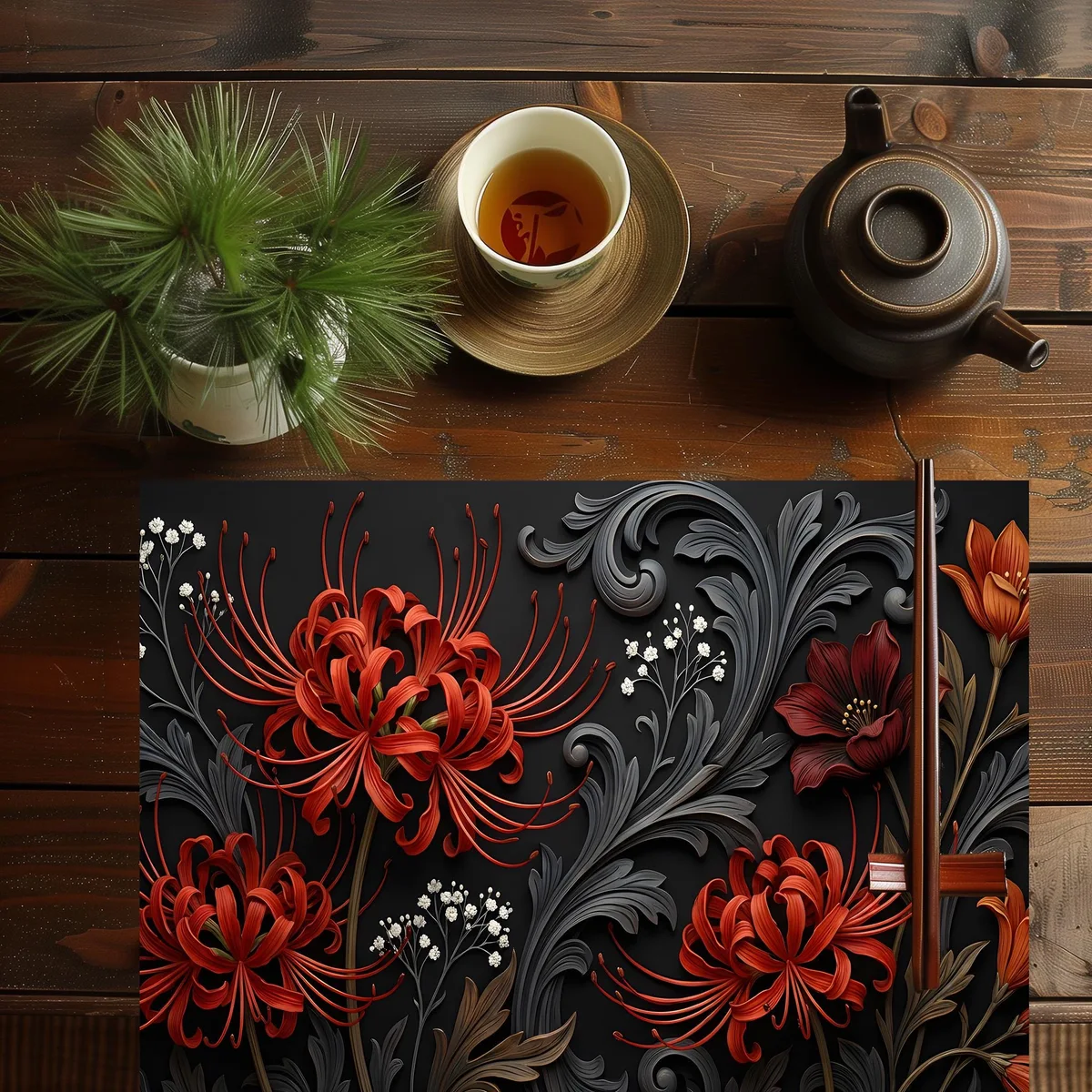
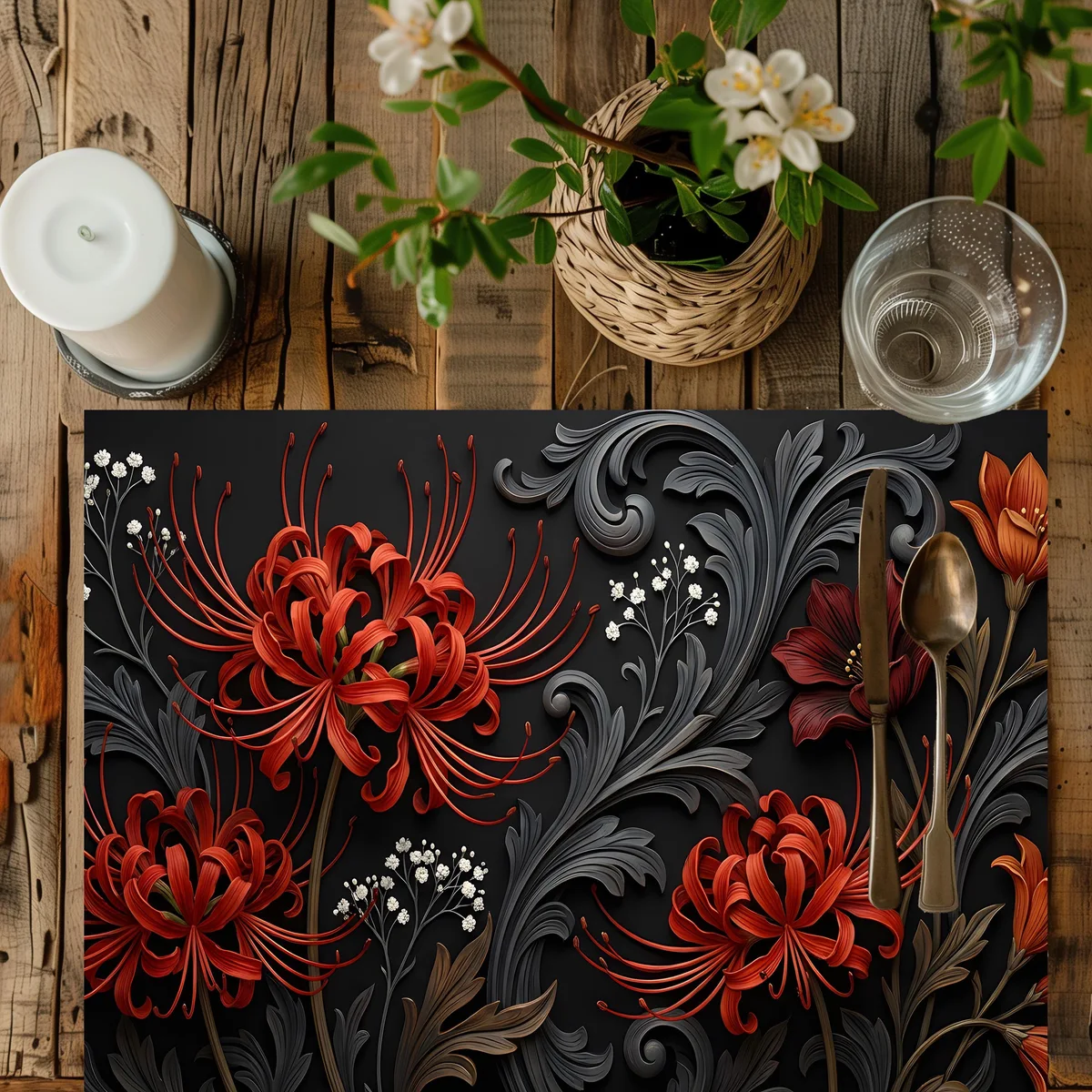
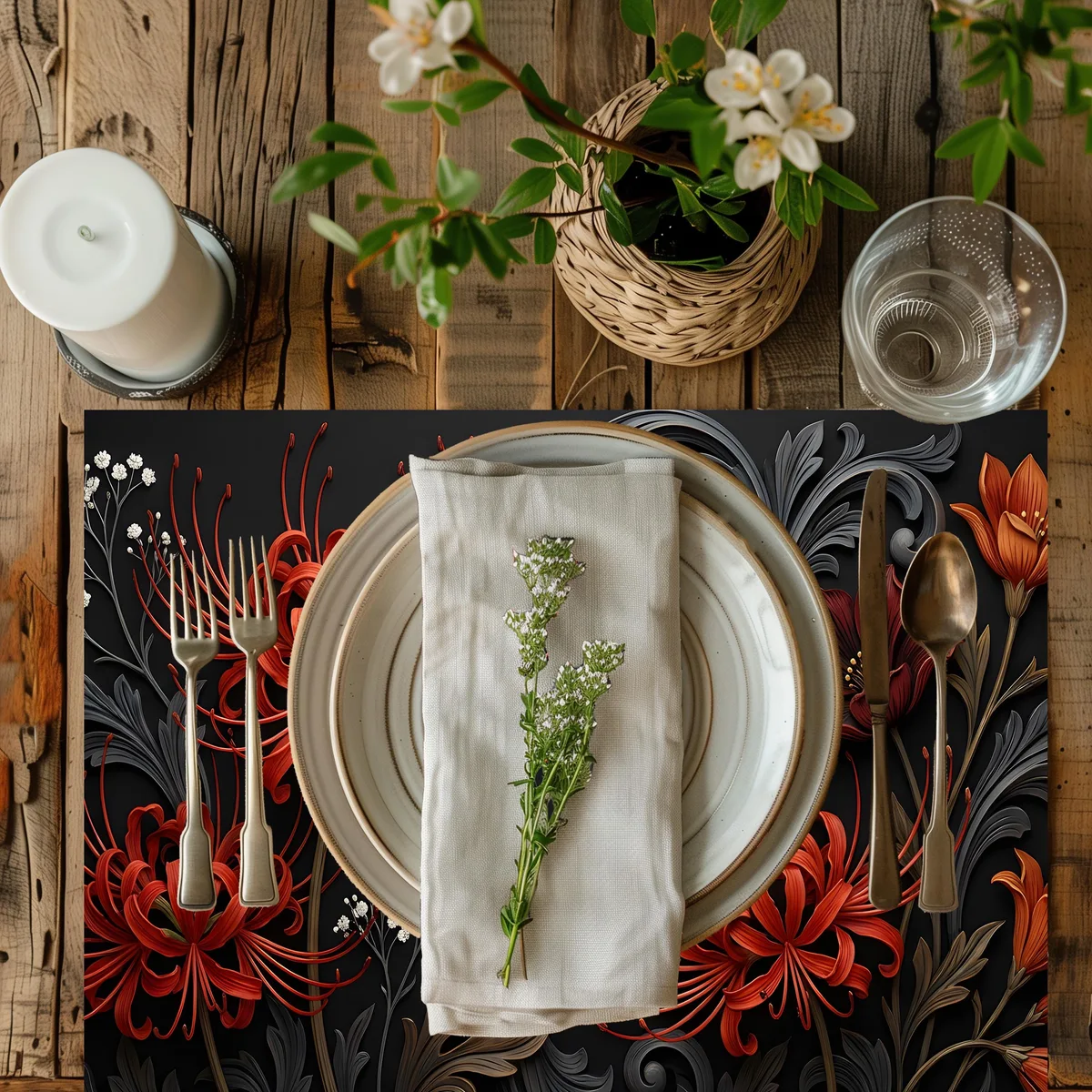
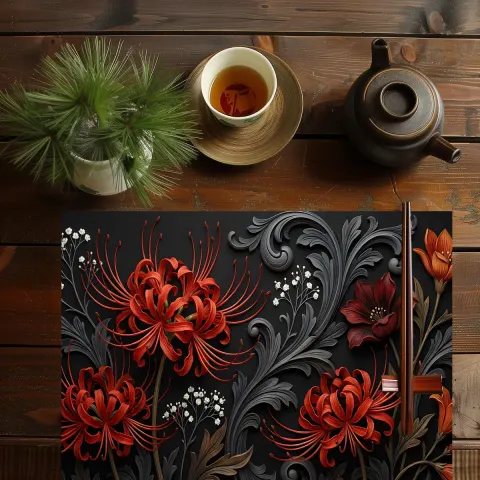
It was not the kind of garden that shed petals or demanded water at inconvenient hours. Its soil was a black so deep it seemed to absorb the din of the day; its blossoms were fierce, precise, and carefully contained within the bounds of cloth. Red spider lilies, poised in perpetual unruliness, flared across the surface like captured sparks. Between them, soft white flowers and curling grey leaves moved in elegant scrolls, as if the whole arrangement had been arrested mid‑waltz.
She laid the first plate down and watched how the red rims echoed the lilies’ flame. The table, once merely serviceable, had become something else—a small stage, perhaps, where even a bowl of soup could play at being important. In the lamplight, the florals did not shout, but they refused to be forgotten; they gave the evening a certain depth, the way a good sentence gives weight to an otherwise ordinary page.
When her guest arrived—the clatter of keys, the brief apology for being late—the room had already learned its lines. The dark garden under their elbows received the glasses, the bread, the nervous first stories of the day. Conversation spilled and settled, as wine does, working its slow color into everything. Now and then, a fingertip traced the curve of a grey leaf or the edge where black met crimson, the mind wandering briefly to another place: a midnight path, perhaps, lit not by stars but by these impossible lilies.
In those moments between courses, when silence hovered like a held breath, the table did not feel empty. The flowers, unchanging yet never quite the same, bridged the pauses with their quiet insistence that beauty need not be enormous to matter. A humble meal became a ceremony, a weeknight transformed into a chapter worth remembering—not because of grand events, but because two people had chosen to sit, to speak, to notice the way red burned against black and to let that small act of noticing make everything seem a little more vivid.
So it was that the placemat—this slight, easily folded thing—became a threshold. On one side lay the noise and rush of the day; on the other, a slower land where time moved in curves rather than in lines, where a table could hold not only plates and glasses, but also the fragile, blooming shape of an evening shared.
Keep wandering through the storybook