The story behind the design
Moonlit Garden

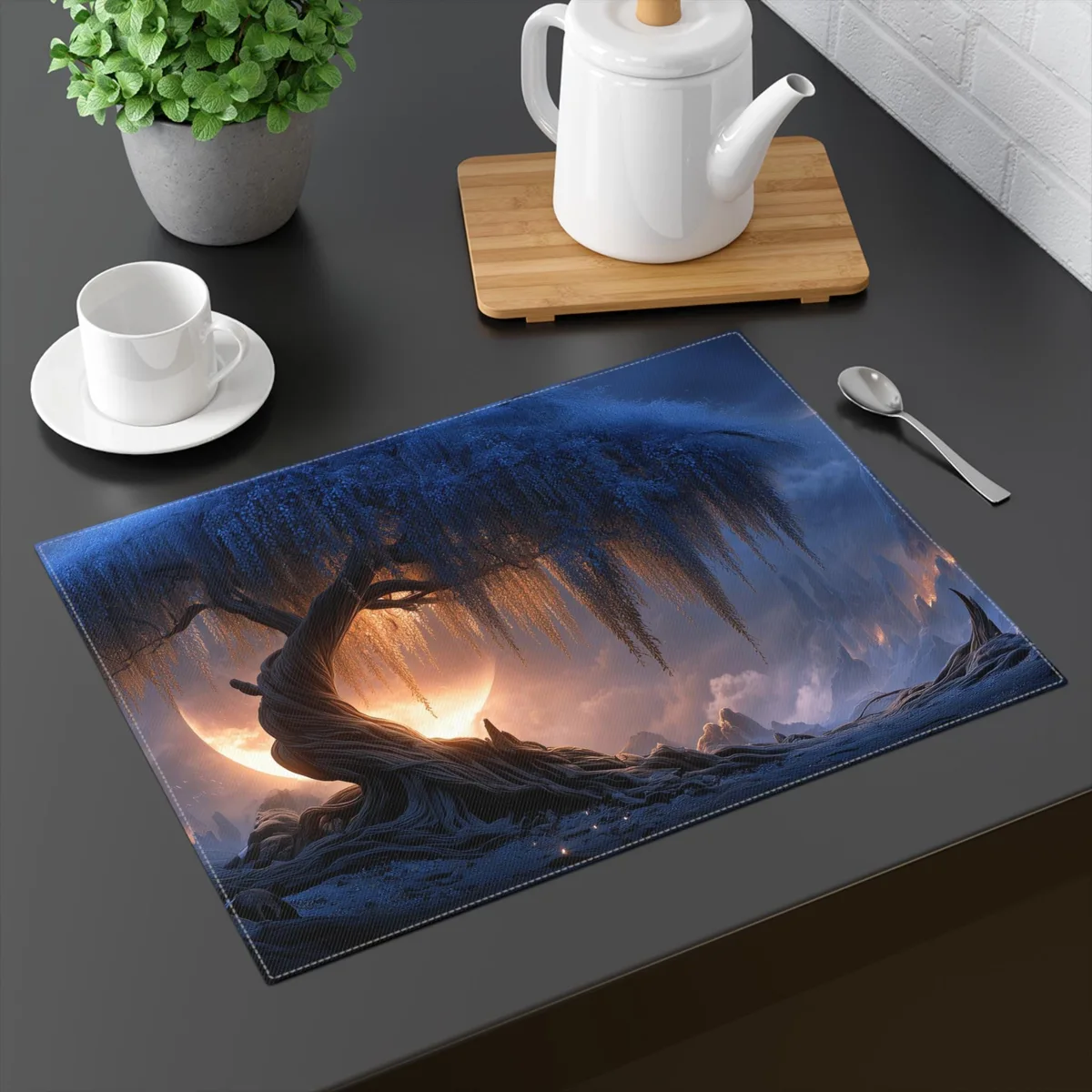
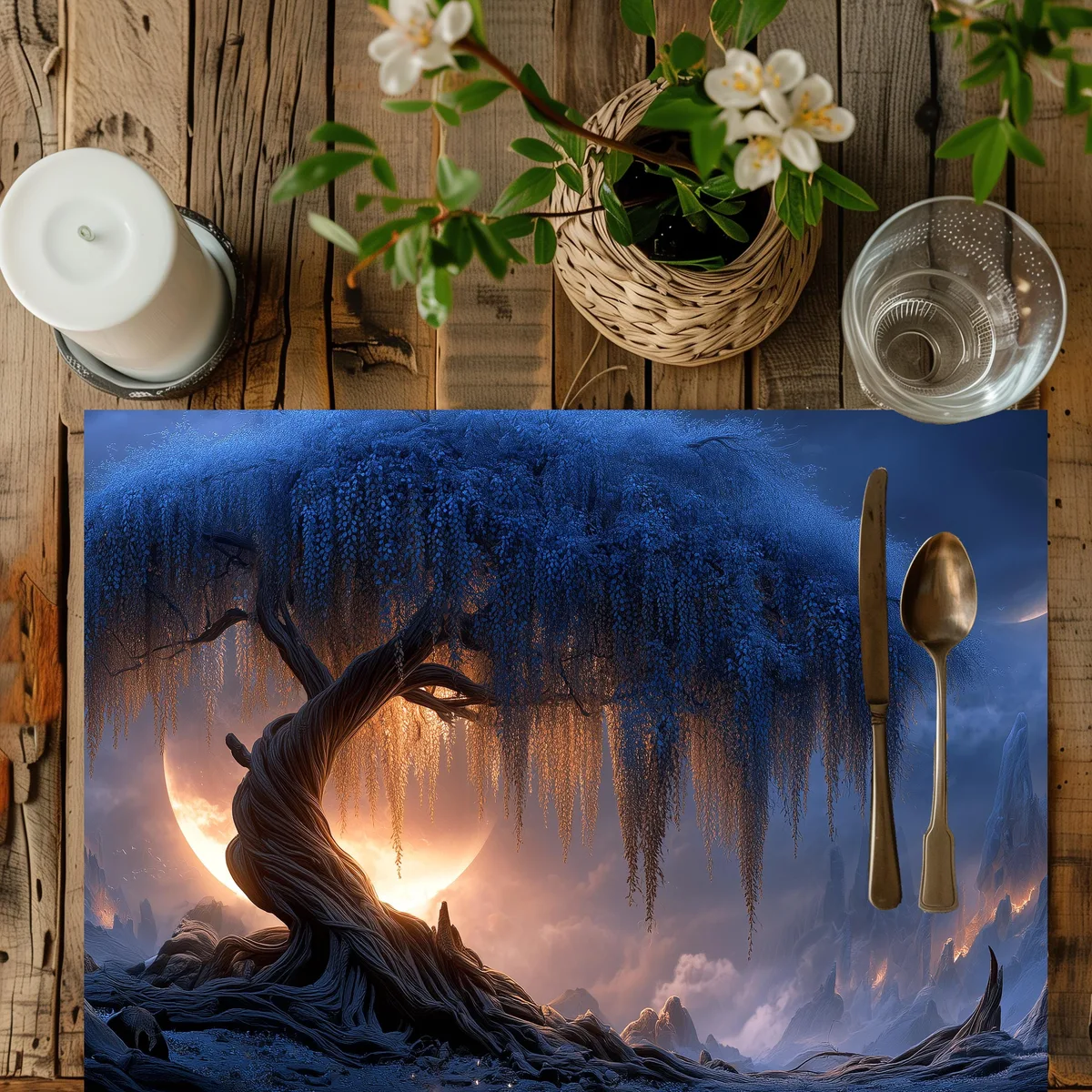
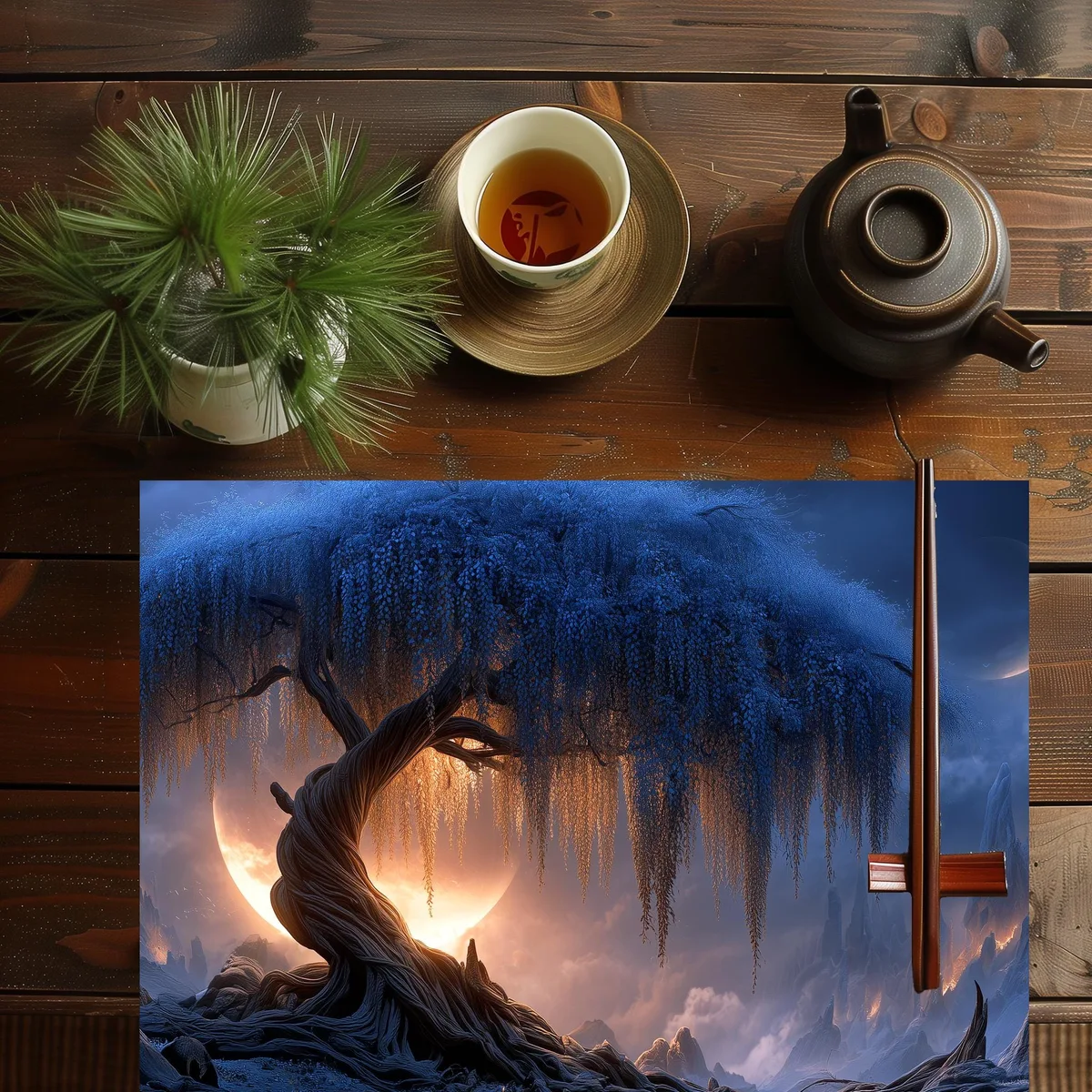
There was a hush that lingered every evening at the table of Old Mrs. Penumbra. She lived alone in the little stone house at the end of the lane, but her meals were never lonesome, for she set each place as if the moon itself might drop by to share a cup of tea. The most cherished piece on her table was a placemat embroidered with the image of a suspended twilight—an ancient wisteria set against a world where twilight always hovered and distant peaks rose like half-remembered dreams.
To any visitor, it was but a placemat, a pretty oddment laid for bread and jam. But to Mrs. Penumbra, it was a whisper of possibility. For she believed the world of the Mystic Wisteria was not just marked by beauty, but by a gentle enchantment: whoever began their meal with a wish and a word of kindness would find, by meal’s end, a sliver of their heart’s longing gently eased.
Some days, Mrs. Penumbra wished for small things—a letter from an old friend, a patch of sunlight after rain, laughter from the garden gate. Other days, as her spoon brushed across the deep blues and golden glow, she wished courage for strangers, warmth for the lonely, and patience for herself. And, often as not, the day shimmered in quiet, wondrous ways: a letter would arrive, a neighbor would knock, or the sun would slip out, scattering golden petals across her tidy kitchen.
It was not magic as the grand books tell it—no thunderbolts, no genies, no wild transformations. It was subtler: a kindness seeded and blossomed quietly, as the wisteria in the illustration blossomed year after year in undisturbed shade.
In that little house, at that small table, the world seemed not so fraught, and Mrs. Penumbra felt herself part of something greater—a winding root or small blossom on an ancient tree in a twilight land, where every meal could become a gentle enchantment, and every wish had its place at the table.
Keep wandering through the storybook